
.gif)
.png)
.png)
.svg)
.svg)
.png)
.svg)

- Key Highlights:
- Pure Gold Biscuit: Meaning & categories
- Reading the BIS Hallmark on a Gold Biscuit
- How to Verify a Gold Biscuit's HUID Using the BIS CARE App
- At-Home Methods to Check Gold Biscuit Purity
- Buying New vs Verifying an Existing Gold Biscuit
- Professional Testing Methods for Gold Biscuit Purity
- How to check if you're buying a real gold biscuit?
- What 24K and 999 Purity Mean for Gold Biscuits as an Investment
- Where to Buy Verified Pure Gold Biscuits in India
- When Is Professional Testing Worth the Cost?
- FAQS - FREQUENTLY ASKED QUESTIONS
Key Highlights:
- The purity level of gold biscuits may vary in India, and understanding the difference between them is crucial for your next investment.
- The 24ct gold biscuit or the 999 gold biscuit has the highest form of purity. among all different types.
- Please make sure to check the BIS hallmark and purity stamps before purchasing your next gold biscuit in India via online platforms or from a store.
- Since April 2023, BIS hallmarking with a six-digit HUID is mandatory for gold sold by registered jewellers in India, as per the Bureau of Indian Standards.
If you're actively planning to buy a 24K gold biscuit in India, you must have the right knowledge about the different purity levels of gold. Terms like '24K', '22K', and '999' get stamped on the packaging of these biscuits, but not many understand what they actually mean. Indians have had a strong connection with gold, as the commodity holds cultural significance and is a form of protection for their overall wealth. Read on to find out how you can make the best purchase in the future.
Here's the short version: a genuine 24-carat gold biscuit is stamped with a BIS hallmark showing '999' or '9999' fineness, plus a six-digit HUID you can punch into the BIS CARE app for instant verification. The magnet and float tests are handy for a quick gut-check at home, but if real money is on the line, XRF or fire assay testing are preferable.
Pure Gold Biscuit: Meaning & categories
The purity tells you how much actual gold is in the biscuit. The higher the purity, the more gold it contains. In India, purity is measured in carats or as a number like 999 or 916. You will usually find the purity stamped on the biscuit itself or on the certificate that comes with it.
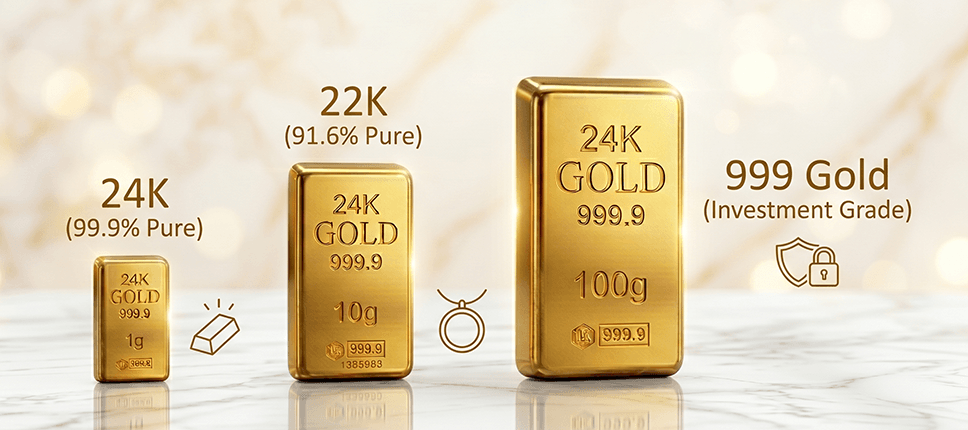
Two terms that we need to understand are 'carat' (C) and 'fineness'. Fineness just tells you how many parts out of 1,000 are pure gold. So 24K works out to 999 fineness, or 99.9% pure; 22K is 916 fineness, around 91.6% pure; and 18K drops to 750 fineness, or 75%. Biscuits sold in India are rarely anything other than 24K/999 – they're meant to be investment products, not jewellery, so there's no real reason to mix in other metals the way a ring or chain would need to for strength.
Gold Biscuit 24k
A 24-carat gold biscuit contains 99.9% gold with almost nothing else mixed in. This makes it the most popular choice for investors. You are buying pure gold, nothing more. Trusted brands like MMTC-PAMP and PAMP Suisse sell this as their main investment product. If you are building wealth or planning for the long term, this option is the one to go for.
Gold Biscuit 22k
A 22-carat gold biscuit contains 91.6% gold. The rest is usually a small mix of copper or silver, which makes it slightly harder. A 22-karat gold biscuit is still a very popular option across India, but it is more commonly used for jewellery than as a pure investment.
999 Gold biscuit
A 999 gold biscuit is the same as 24K gold. The number simply means 999 out of 1000 parts are pure gold, which works out to 99.9% purity. Some biscuits go even further and are marked 999.9, meaning 99.99% purity. Both are great for investment.
To put a number on it: a 10-gram biscuit stamped 999 has 9.99 grams of actual gold in it. The same 10-gram biscuit at 916 fineness only has about 9.16 grams. That 0.83-gram gap is exactly what a jeweller or lender will price in when they value the piece.
Carat-to-Fineness Reference Table
| Carat | Fineness | Gold % | Common Use | Investment Suitability |
|---|---|---|---|---|
| 24K | 999 / 9999 | 99.9% / 99.99% | Investment biscuits, coins | Best - highest resale value |
| 22K | 916 | 91.6% | Jewellery, some coins | Good - slightly lower resale |
| 18K | 750 | 75% | Studded/diamond jewellery | Not ideal for pure investment |
Note: The investment-suitability column reflects how easily a piece is resold or accepted as loan collateral, not a guarantee of price performance.
Reading the BIS Hallmark on a Gold Biscuit
Hallmarking, at its core, is just an official record of how much precious metal is actually in an item: it exists to stop adulteration. Gold and silver are the only two metals covered under India's scheme right now, per the Bureau of Indian Standards. Since 1 July 2021, every hallmark needs to carry three things: the BIS logo; the purity in carats and fineness (something like 999); and a six-digit alphanumeric HUID - a unique, traceable ID for that exact item. Jewellers and mints are free to stamp their own mark on top of these three, but those three are non-negotiable.
The system wasn't switched on everywhere at once: it rolled out district by district over a few years. By BIS's own count, over 14 crore gold articles have been hallmarked with a HUID since the scheme started, and more than 1.4 lakh jewellers are now registered. Bars and biscuits at 999/995 fineness can only be hallmarked by refineries and mints that BIS has specifically approved.
How to Verify a Gold Biscuit's HUID Using the BIS CARE App
- Download the BIS CARE app from the Android Play Store or Apple App Store - it is free and available in 12 languages.
- Open the app and select the 'Verify HUID' option on the home screen.
- Enter the six-digit alphanumeric HUID printed on the biscuit or its certificate.
- The app displays the registered purity, the hallmarking centre, and the jeweller or mint details linked to that HUID.
- Cross-check these details against the physical biscuit and its packaging before completing the purchase.
This only works on items hallmarked after the HUID system kicked in. If you have an older biscuit with no six-digit code, visit a professional assayer instead.
At-Home Methods to Check Gold Biscuit Purity
Magnet Test
Pure gold doesn't react to magnets at all. Bring a strong neodymium magnet close to the biscuit; if it pulls even slightly, there's iron or nickel mixed in somewhere. However, copper and zinc are also non-magnetic, so a clean pass here doesn't guarantee you're holding real gold, just that it's not an iron fake.
Float Test (Density Check)
Gold is heavy - about 19.3 g/cm³, which puts it among the densest metals you'll handle day to day. Drop the biscuit into a glass of water and watch what happens. Real gold sinks straight to the bottom without hesitation. If it floats, bobs, or sinks slowly, lighter metals are mixed in. Works best on smaller pieces, roughly 1g to 10g.
Vinegar and Ceramic Tests
Put a drop of white vinegar on the surface: real gold simply ignores it: no colour change, no tarnish. Drag the biscuit lightly over an unglazed ceramic tile; it should leave behind a gold-coloured streak, while black means impurities.
Common Myths About Gold Biscuit Purity
Myth 1: "If it shines like gold, it is gold."
Shine comes from polishing, not purity. Plenty of fakes get buffed to look exactly like a genuine 999 biscuit, which is precisely why no one should stop at a visual check.
Myth 2: "Every gold biscuit in India is 24K."
Most investment-grade biscuits are 24K/999, sure, but lower-purity pieces still exist: particularly from unverified online sellers chasing a cheaper price tag. The word "biscuit" on the label means nothing; the purity stamp and HUID are what actually confirm the grade.
Myth 3: "The magnet test settles it."
A magnet only catches iron-based fakes. Copper, brass, and a few other non-magnetic fillers will sail right through. Treat it as one part of the process, not the whole solution. Combine it with the hallmark check and, where the value justifies it, a professional test.
Buying New vs Verifying an Existing Gold Biscuit
Buying new? Do the HUID check and verify the certificate before you hand over money, and hold on to the invoice.
Already own a biscuit and need to verify it before resale or pledging it for a loan?
That's a different path. Lenders and bullion dealers will usually want an independent assay from a BIS-recognised centre, especially if the piece predates the HUID rollout in mid-2021. If you've still got the original purchase certificate, it would shorten the process and often get you a fairer valuation.
Professional Testing Methods for Gold Biscuit Purity
- X-Ray Fluorescence (XRF) - a non-destructive scan accurate to within about 0.1%, widely used by jewellers and assaying centres.
- Fire Assay - the most accurate method; a small sample is melted and chemically analysed and used for high-value certification.
- Caratmeter / Electronic Gold Tester - a portable device measuring electrical conductivity; faster but less precise than XRF.
Professional testing is worth the cost for any biscuit valued above roughly ₹50,000, or when buying from a source you cannot independently verify.
How to check if you're buying a real gold biscuit?
1. BIS Hallmark
The most reliable check. The BIS mark confirms the purity on the biscuit is accurate.
2. Purity Stamp
Any real gold biscuit of 24 carat will have 999 or 999.9 stamped on it. For 22K, look for 916.
3. Certificate of Authenticity
A 24ct gold biscuit from any trusted brand comes with a certificate that lists the weight, purity, and a unique serial number.
4. Buy from Trusted Sources
Stick to certified platforms or authorised dealers. It is the easiest way to make sure you are getting an original gold biscuit and not something fake.
What 24K and 999 Purity Mean for Gold Biscuits as an Investment
Purity isn't a technicality: it's the thing that determines what your biscuit is actually worth. A 10g piece at 999 fineness simply holds more gold than a 10g piece at 916, and the price reflects that gap directly. Certified 999 biscuits from recognised mints also resell better, for one simple reason: buyers and lenders can check the purity in seconds.
Resale value? Yes. A 999 fineness biscuit from a recognised mint with a valid BIS hallmark commands the best resale price because buyers and lenders can verify its purity instantly. Biscuits without hallmarks or with lower fineness are typically bought at a discount, reducing the return on the original investment.
Gold biscuits also double up as loan collateral fairly often, and lenders look at purity before deciding how much they'll lend against it. A biscuit with a verifiable 999 hallmark generally unlocks a higher loan amount for the same weight than something that can't be verified.
Gold can absolutely sit alongside mutual funds, fixed deposits, or bonds in a wider portfolio, but its value as collateral, or even as a long-term store of wealth, hinges on verified purity, not just how heavy it feels in your hand. That's part of why more investors are leaning toward digital gold or sovereign gold-backed instruments these days. The purity and storage are checked from the start, so there's no room for doubt.
Where to Buy Verified Pure Gold Biscuits in India
A few options stand out: government mints like the India Government Mint and MMTC-PAMP issue certified 999.9-purity biscuits in tamper-proof packaging with proper certificates.
Nationalised banks also sell BIS-certified coins and biscuits over the counter. Then there are reputed jewellers running BIS-registered hallmarking centres and SEBI-regulated digital gold platforms that hold physical gold in insured vaults on your behalf.
Whichever route you pick, ask for the purity certificate and run the HUID through the BIS CARE app before finalising anything.
Whether you go for 24K, 22K, or 999 gold, make sure the purity is certified, the source is trusted, and the paperwork is in order. You can also explore certified gold biscuit options through the Aditya Birla Capital's digital gold solutions, powered by MMTC-PAMP. Visit their website or download the ABC app for more information.
When Is Professional Testing Worth the Cost?
This question comes up a lot, and the honest answer is it depends on what's at stake. Financial advisors and gold-lending desks generally agree that the small fee for an XRF or fire-assay test pays for itself once the gold involved is worth a meaningful sum. Getting the purity wrong costs a lot more than the test ever will.
Also Read: Difference Between 22K and 24K Gold
FAQS - FREQUENTLY ASKED QUESTIONS
Is a 999 gold biscuit the same as a 24K gold biscuit?
Pretty much, yes. '999' and '24K' are two ways of saying the same thing: 99.9% pure gold, with barely any alloy in the mix. Occasionally, you'll spot a 999.9 stamp instead, which just means 99.99% purity, a touch finer than standard 24K.
Which purity is best for investment?
24K, hands down. No alloy metals means it tracks the market rate of gold most closely, gram for gram. 22K has its place in jewellery, where a bit of hardness actually helps, but you'll get slightly less back on resale compared to 24K.
How do I know if my gold biscuit is real?
Look for the BIS hallmark with its six-digit HUID and run it through the BIS CARE app. Check the purity stamp (999 or 916) is actually on the piece. Ask the seller for a certificate of authenticity. You can also get it tested at a BIS-recognised assaying and hallmarking centre to be sure.
Is a BIS hallmark mandatory on gold biscuits sold in India?
Yes, it has been since April 2023. Registered jewellers can't legally sell gold, biscuits included, without a HUID-backed hallmark. It's important to note that bullion at 999/995 fineness can only carry a hallmark from refineries and mints that BIS has specifically approved.
What is the most accurate way to test gold biscuit purity?
Fire assay melts down a sample and analyses it chemically, which is about as definitive as it gets. If you'd rather not melt anything, X-ray fluorescence (XRF) is the non-destructive alternative, with an accuracy of roughly 0.1%. You can find both at BIS-recognised assaying and hallmarking centres.
Does the BIS hallmark expire or need renewal?
Once it's hallmarked, it's hallmarked forever. The Bureau of Indian Standards confirms that the mark remains valid for the lifetime of the item, whether it changes hands, is returned, or sits in a locker for years before it's sold.
The information contained herein is generic in nature and is meant for educational purposes only. Nothing here is to be construed as an investment or financial or taxation advice nor to be considered as an invitation or solicitation or advertisement for any financial product. Readers are advised to exercise discretion and should seek independent professional advice prior to making any investment decision in relation to any financial product. Aditya Birla Capital Group is not liable for any decision arising out of the use of this information.
.svg)


.webp)
