Home Finance
 Personal Finance
 SME Finance
 Loan Against Securities
 Business
 Mutual Funds
 Stock and Securities
 Portfolio Management Services
 Pension Funds
 Real Estate Investments
 Life Insurance
 Health Insurance
 Multiply Wellness
 Motor Insurance
 Travel Insurance
 Pay Bills
 Pay anyone
 Pay on call
 Payment Lounge
 ABC Credit Cards



 1800-270-7000

 ENG
ENG 



गर्मी से बचने के लिए बारिश की फुहारें राहत भरी होती हैं . लेकिन मानसून में कई बीमारियां भी होती हैं, जो आपके स्वास्थ्य को नुकसान पहुंचा सकती हैं. इसलिए मानसून में खुद को बीमारियों से बचाने के लिए 'क्या करें और क्या ना करें' की लिस्ट नीचे दी गयी है.
Dos:
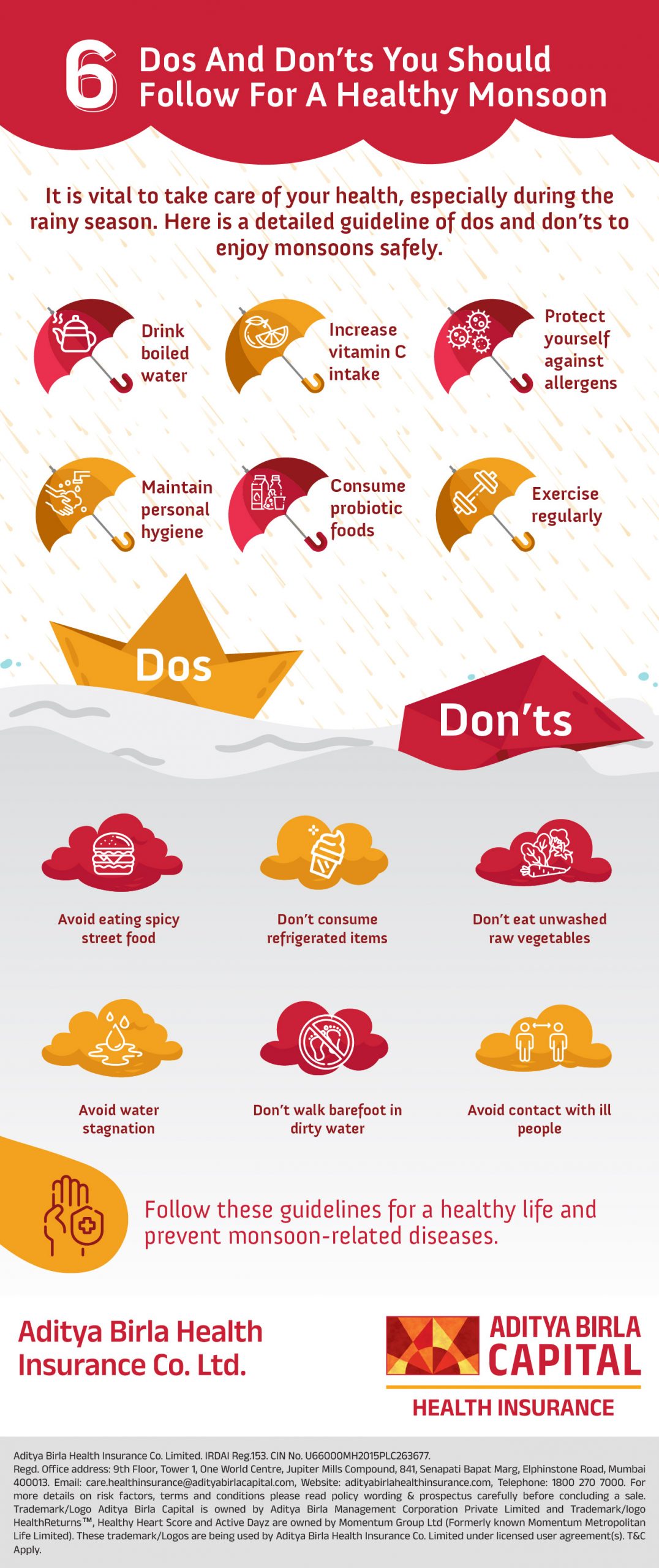
- Drink boiled water as it kills germs and bacteria, thus preventing water-borne diseases like cholera, typhoid, and dysentery.
- Monsoon is a season when viral infections, colds and the flu are at their peak. Therefore, raise your vitamin C intake. Vitamin C-rich foods such as sprouts, oranges, and fresh green vegetables boost your immunity.
- मानसून के मौसम में बढ़ सकती है आपकी एलर्जी या अस्थमा. डस्ट माइट और फंगस नमी वाले एरिया में पनपते हैं. इसलिए, अपने घर को साफ सुथरा रखें और एलर्जी से बचें.
- Maintain personal hygiene. Bath daily to avoid infections. Clean your nails so that germs do not accumulate. Wash your hands before and after eating food.
- प्रोबायोटिक फूड की मदद से आंत में अच्छे बैक्टीरिया को बढ़ाने में मदद मिलती है, जो खाना पचाने में सहायता करते हैं. ज़्यादा पोषक तत्व पाने के लिए योगर्ट, छाछ, दही और घर के बने अचार जैसे भोजन की मदद से अपनी प्रोबायोटिक खुराक बढ़ाएं. यह आपके पाचन तंत्र को भी सेहतमंद बनाता है.
- Try practicing yoga, breathing exercises, simple stretch exercises, or sit-ups for your daily exercise routine if you cannot step outside.
Don’ts:
- हमारे पाचन तंत्र मानसून के दौरान कमज़ोर हो जाते हैं. ऐसे में मसालेदार, तला हुआ, कच्चा, सड़क किनारे का खाना और जंक फूड खाने से बचें. इनका हमारे शरीर पर खराब प्रभाव पड़ता है, जिससे हमें थकान और सुस्ती आती है. क्योंकि इनमें से कई चीज़ें खुली हवा में रखी रहती हैं, इसलिए इनमें हानिकारक सूक्ष्म जीव हो सकते हैं.
- Avoid drinking or eating cold refrigerated items to prevent a cold.
- Don’t eat raw vegetables in salads. Instead, scrub fruits and vegetables thoroughly before consuming them.
- Don’t let water accumulate in and around your house, as it can create a breeding ground for mosquitoes. This can lead to the spread of malaria or dengue caused by the Aedes mosquito.
- गंदे पानी या कीचड़ में नंगे पैर न चलें, ख़ास तौर से तब जब आपको है डायबिटीज, क्योंकि इससे इन्फेक्शन होने की संभावना बढ़ सकती है.
- Keep a safe distance from people who have the flu or cold so that respiratory particles from them do not enter your system.
While you enjoy the rain, don’t take a rain check on your health.
Key Takeaways
- Drink boiled water, increase your vitamin C intake, and maintain personal hygiene during the monsoon season.
- Our digestive system can be particularly vulnerable during the monsoons, so avoid spicy, fried, and raw foods, as well as street food and junk food.
- Additionally, do not walk barefoot in dirty or muddy water, especially if you have diabetes, as this can increase the risk of infections.
Actively participate in the Activ Living community and get more information on mindfulness and fitness.
Popular Searches
how to lower blood pressure | surya namaskar steps | acupressure points for high blood pressure | homeopathic medicine for asthma | lymphocytes low | basal metabolic rate | acupressure points for diabetes | what is the fastest way to cure tb? | is beetroot good for diabetes | hemoglobin rich food | how to remove gas from stomach instantly home remedies | ayurvedic treatment for asthma | iron rich foods vegetarian indian | is watermelon good for diabetes | ayurvedic medicine for high bp | home remedies for cholesterol control | alkaline foods | burning 300 calories a day | homeopathy vs allopathy | is mango good for diabetics | types of asanas | is coconut water good for high blood pressure | 5 important things you should avoid during periods | is papaya good for diabetes | thyroid homeopathy medicine name | fruits good for liver | 30-30-30 weight loss rule | muskmelon benefits | how many bananas can a diabetic eat a day | surya namaskar: 12 steps with explanation