Home Finance
 Personal Finance
 SME Finance
 Loan Against Securities
 Business
 Mutual Funds
 Stock and Securities
 Portfolio Management Services
 Pension Funds
 Real Estate Investments
 Life Insurance
 Health Insurance
 Multiply Wellness
 Motor Insurance
 Travel Insurance
 Pay Bills
 Pay anyone
 Pay on call
 Payment Lounge
 ABC Credit Cards



 1800-270-7000

 ENG
ENG 



What Causes Obesity?
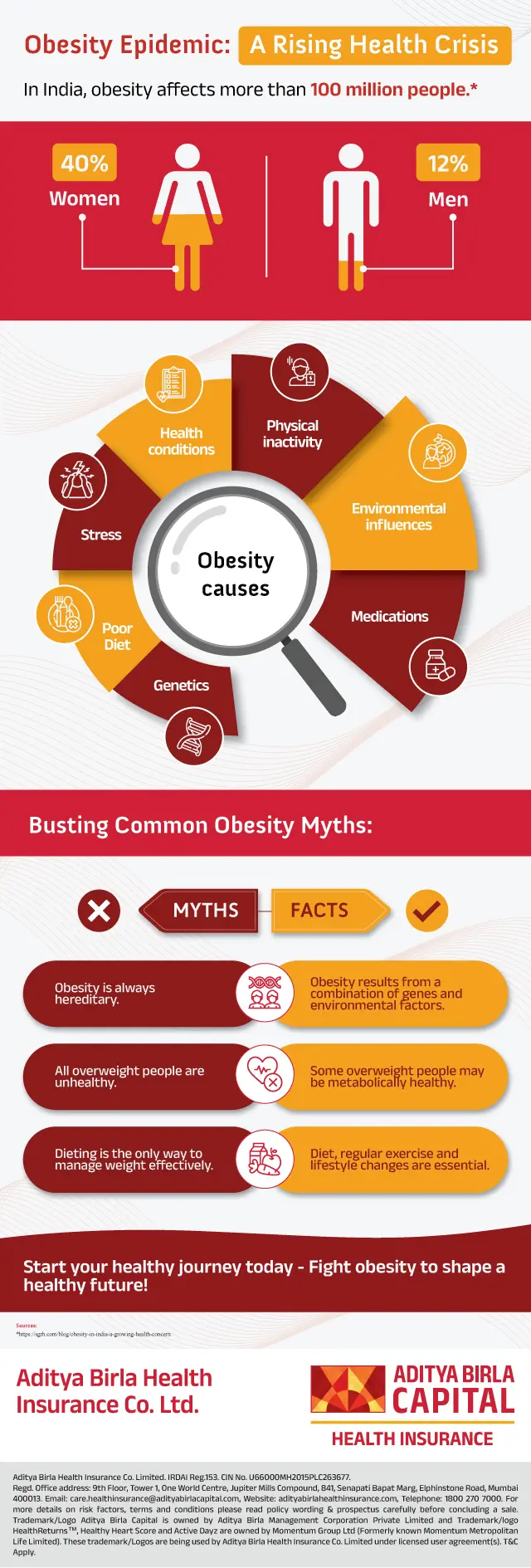
Obesity develops from a complex mix of biological, lifestyle, and environmental factors—not just overeating. When these influences stack up, long-term weight gain becomes more likely.
Key contributors include:
- High-calorie, ultra-processed diets that spike appetite and reduce fullness
- Inactive activity and minimal physical exercise.
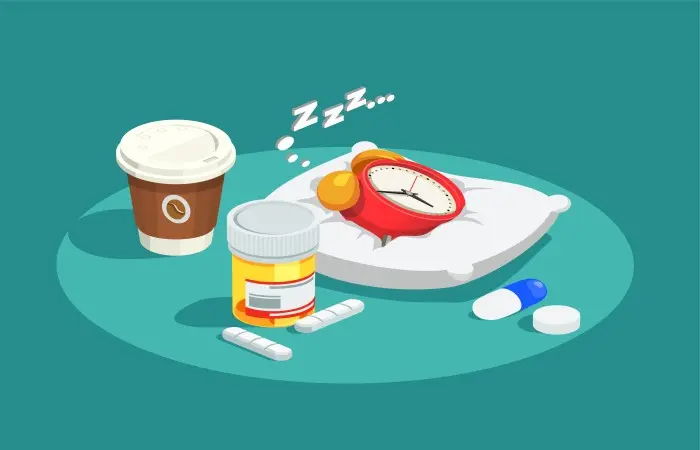
- Poor sleep disrupts hunger hormones
- Emotional eating as a result of chronic stress.
- Genetic predisposition affecting metabolism and fat storage
- Certain medications can change appetite and hormonal imbalances.
- Food environment with easy access to cheap, unhealthy options
Addressing obesity means tackling these root causes together, not in isolation.
Health Risks of Obesity: Why Prevention Matters
When you wonder how to prevent obesity, there is no single answer. It is compounded efforts that show results for people. But before tackling how to prevent obesity, let’s dive into the why of it.
Cardiovascular disease
Obesity increases your risk for cardiovascular diseases, including:
- Coronary artery disease: Narrowing or blockage of your coronary arteries, which supply oxygen-rich blood to your heart,
- Congestive heart failure: A long-term condition in which your heart cannot pump blood well enough to meet your body’s needs,
- Heart attack: A fatal condition that happens because you don’t have enough blood flow to some of your heart muscles, and
- Stroke: A medical emergency that occurs when something prevents your brain from getting enough blood flow.
Type 2 diabetes
Obesity increases your type 2 diabetes risk. This lifestyle condition occurs when your body cannot use insulin properly, and you have persistently high blood sugar levels.
Musculoskeletal problems
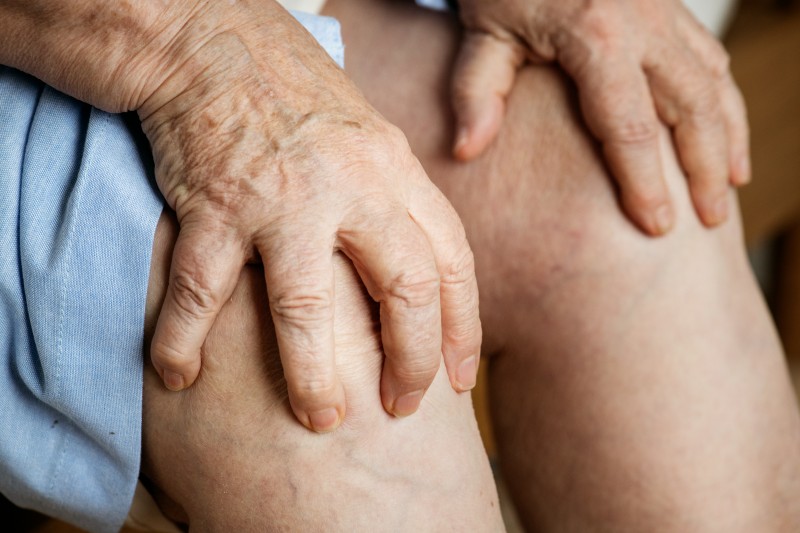
Excess body fat can compress the organs of the respiratory system, and place added stress on the musculoskeletal system. This contributes to:
- Arthritis: A disease that causes damage to your joints,
- Asthma: A respiratory illness in which the airways become inflamed, narrow, and obstructed by excess mucus,
- Back pain: Discomfort you feel anywhere along the back of your body, from the base of your neck to the top of your butt,
- Obesity hypoventilation syndrome: A breathing disorder that affects some people who are obese, and
- Sleep apnea: A condition that hinders your breathing while sleeping.
Fertility problems
Obesity increases the risk of female infertility and can cause pregnancy complications.
Shorter life expectancy
Obesity can significantly shorten life expectancy. Studies show that individuals with extreme obesity may lose up to 14 years of life compared to people at a healthy weight, mainly due to increased risks of heart disease, stroke, diabetes, certain cancers, and other health complications associated with excess weight.
Cancer
Obesity increases the risk of certain cancers, including breast, colon, endometrial, and liver cancers, possibly due to inflammation and changes in hormone levels caused by excess fat.
Mental health impact
Obesity is highly associated with depression, anxiety, low self-esteem, and body image distress. Mental health and weight gain have a vicious cycle due to social stigma and weight bias that may result in isolation, emotional eating, and chronic stress. Mood regulation may also be affected by hormonal changes and inflammation that are related to obesity. Mental health support is an essential component of obesity prevention and treatment because it enhances motivation, treatment adherence, and long-term outcomes through the consideration of both mental and physical health.
Healthy eating
Diet is not a one-size-fits-all approach. Therefore, one should customize dietary changes to fit their needs and preferences. There are ways to make meals packed with healthy food. Your provider can suggest scientifically proven eating plans like the Mediterranean diet (a plant-based eating pattern that emphasizes fruits, vegetables, whole grains, legumes, and healthy fats) or the DASH (Dietary Approaches to Stop Hypertension) diet (which emphasizes eating nutrient-rich foods like fruits, vegetables, whole grains, and lean proteins to lower blood pressure). These positive guidelines can help you meet your nutrition goals.
Regular physical activity
Physical activity helps burn calories, and there are numerous ways to boost it. To manage weight, you must burn more calories than you consume or stay in a calorie deficit. To fuel your weight management efforts, include cardiovascular exercises like running, walking, or biking and some resistance training.
Portion control
Portion sizes have quietly increased over time, leading to excess calorie intake even with “healthy” foods. Portion control will teach you to match the intake with your real energy needs in a way that is not excessive.
Serving food rather than eating out of packets, eating with small plates, and reducing the pace of eating enhance the sense of fullness. Mindless overeating is minimized by paying attention to hunger signals and satiety. Regular control of portions normalises blood sugar, aids in digestion, and creates a healthier interaction with food; all acting together as a key to avoiding progressive weight gain in the long term.
Better sleep
Sleep loss interferes with appetite hormones-ghrelin stimulates appetite and leptin decreases fullness, thus predisposing one to overeating the following day. Lack of sleep also undermines impulse control and drives up the desire to consume high-energy foods rich in sugar and high fat, which are fast sources of energy.
Chronic sleep deprivation changes metabolism and insulin sensitivity, increasing the risk of obesity. During this stage, it is important to focus on 7-9 hours of quality sleep, a steady sleep schedule, and avoiding screens before sleep, which would help to balance the level of appetite, increase energy, and sustain a healthy weight.
Stress management
Prolonged stress elevates cortisol, which stimulates hunger and promotes the accumulation of fats, especially in the belly. Emotional eating is also motivated by stress, as food serves as a coping resource as opposed to a source of energy.
Building non-food stress outlets, including walking, breathing experiences, breaks, journaling, or social interrelations, brings down dependency on unhealthy comfort food. Stress management enhances food and activity decisions and sleep. In the long run, healthier responses to stress will interrupt the loop of emotional stimuli and weight increase.
Behavioral changes

Counseling, support groups and cognitive behavioral therapy (CBT) (a structured, goal-oriented therapy) can help support positive changes. They can also help you manage stress and address emotional and psychological factors hindering your progress.
Managing Obesity If You Are Already Overweight
The secret to obesity management is not crash diets or miracles but rather developing systems that will sustain healthier decisions. Behavioural nutrition, sustainable physical activity, and medical guidance are the most effective methods that provide a personalised approach. Concentrate on minimal and attainable alterations, such as well-balanced meals, regular sports activities that one is fond of, and regular sleep patterns.
The habits of tracking (not just weight) allow observing trends related to overeating or inactivity. Medical assistance can be in nutrition counselling, emotional eating therapy, medication, or supervised programs where necessary. Notably, change is not a straight line, and failure is entailed in progress. A focus on metabolic health, strength, and daily energy as opposed to rapid weight loss creates long-term consistency. The good thing is that viable development is not about extremes, but about the things that you can keep on doing.
Obesity Prevention Across Different Age Groups
The concept of preventing obesity at various life stages varies according to the age of the individual, since habits, surroundings and biological needs vary with age. Active play, screen time, and balanced family meals are important in shaping lifelong behaviours among children at early stages of life. Nutrition literacy and healthy peer conditions with positive body image contribute to the well-being of teenagers.
The adults require pre-set schedules of eating, exercising, sleeping, and alleviating stress to balance the sedentary jobs and time limitations. In old age, maintaining body weight, physical activity, and dietary adequacy are crucial towards avoiding weight gain and metabolic deterioration. Preventive approaches to age-specific issues enhance compliance and long-term intergenerational health.
Key Takeaways
- Obesity increases the risk of cardiovascular disease, type 2 diabetes, and fertility problems.
- It can stress the musculoskeletal system, leading to arthritis, asthma and sleep apnea.
- Eat healthy, exercise often, and make behavioral changes to prevent and manage obesity.
Stay tuned to the Activ Living Community. Keep up to date with the latest health tips and trends through expert videos, podcasts, articles, and much more on nutrition, fitness, mindfulness, and lifestyle conditions like Asthma, Blood Pressure, Cholesterol, and Diabetes. Activ Living ke saath sahi sehat ki shuruat ABHI karo.
You may also be interested in the following blogs:
- 5 Tips For Parents To Help Reduce Childhood Obesity
- Fighting Obesity: Effective Treatment Options For Long-Term Success
Popular Searches
How to lower blood pressure | Fruits good for liver | Unhealthy foods | Ragi Benefits | Basal Metabolic Rate | Acupressure points for High Blood Pressure | Ayurvedic medicine for blood pressure | How to control cholesterol at home | Homeopathy for Asthma | Biological Age | Home remedies for TB | Natural beta blockers | Negative effects of internet | Types of walking | Blood pressure calculator | Blood sugar calculator | BMI Calculator