
.gif)
.png)
.png)
.svg)
.svg)
.png)
.svg)

- Key Highlights
- What Are Digital Gold and Digital Silver?
- How Digital Gold Works
- How Digital Silver Works
- Digital Gold vs Digital Silver: Side-by-Side Comparison
- Tax Treatment: Digital Gold vs Digital Silver in India
- Price Behaviour and Returns: Gold vs Silver
- Is Digital Gold Regulated? What SEBI Said in November 2025
- Which Should You Choose? A Guide by Investor Profile
- Frequently Asked Questions
Digital gold tracks the price of 24K gold and is better suited to investors who want a stable store of value. Digital silver tracks 99.9% pure silver, costs less per gram, and is more volatile because industrial demand, from solar panels to electronics, moves its price independently of monetary factors. Both carry the same tax treatment in India (3% GST on purchase; LTCG at 12.5% after 24 months). The right choice depends on your risk appetite, investment horizon, and portfolio goals.
This digital gold vs digital silver guide compares the two on five dimensions: what they are, a side-by-side view, tax, price behaviour, and how to choose.
Key Highlights
- Both digital gold vs digital silver options are backed by physical metal held in insured vaults, but silver’s price moves more sharply because it doubles as an industrial metal.
- The tax is identical for both: 3% GST when you buy, slab-rate tax on gains sold within 24 months, and 12.5% long-term capital gains (without indexation) after 24 months.
- Digital silver costs far less per gram than digital gold, so many platforms let you begin with as little as ₹10.
- On 8 November 2025, SEBI publicly cautioned that digital gold and e-gold are neither securities nor commodity derivatives and sit outside its regulatory purview.
- Gold leans towards stability, while silver leans towards higher risk and higher potential upside, which is why some investors simply hold both.
What Are Digital Gold and Digital Silver?
So what is digital gold, and how does it differ from silver?
Digital gold is 24K gold that is 99.9% pure, bought online in Indian rupees and held on your behalf in an insured vault; you own real metal without ever handling it, and you can ask for physical delivery whenever you want.
Digital silver follows the same vault-backed idea, except the underlying metal is 99.9% pure silver. On both, your holding is displayed on the platform as grams of metal, priced live, and can be sold for cash or converted into coins and bars. So if you are weighing up what is digital silver against its yellow cousin, structurally they are near-identical.
The one thing that’s important is why their prices move. Gold is driven mainly by monetary factors: inflation, interest rates, currency swings and safe-haven buying. Silver carries all of that plus a second engine: industry. A large share of silver is consumed in solar panels, electronics and electric vehicles, so it reacts to factory demand as much as to investor sentiment. That extra layer is the root of nearly every difference between digital gold and silver that follows.
How Digital Gold Works
A digital gold investment runs on a simple buy-store-sell cycle. You buy digital gold online in rupees on many platforms for as little as ₹1, and the provider stores an equal quantity of physical gold in an insured vault in your name. When you want out, you sell at the live market rate, and the money returns to you. Prefer the metal in hand? Most providers let you take physical delivery as coins or bars, subject to their charges.
How Digital Silver Works
Digital silver investment in India mirrors that cycle. You invest in digital silver in rupees at live prices; the platform keeps the equivalent of 99.9% pure silver in an insured vault, and you can sell online or buy digital silver and convert it to physical coins and bars. The point to remember is silver’s dual role: both an investment and an industrial raw material used in solar panels and electronics. That twin demand is what makes silver more lively than gold.
Digital Gold vs Digital Silver: Side-by-Side Comparison
Here is a quick comparison of digital gold and silver. Purity, GST and tax are set by rule; per-gram price and minimum amounts are platform- and market-driven, so treat those as indicative.
| Parameter | Digital Gold | Digital Silver |
|---|---|---|
| Underlying purity | 24K, 99.9% pure gold | 99.9% pure silver |
| Minimum investment | From about ₹1 (platform-set) | From about ₹10 (platform-set) |
| Indicative price per gram | Higher (thousands of ₹/gram) | Much lower (tens of ₹/gram) |
| Price volatility | Lower, steadier store of value | Higher; amplified by industry |
| Liquidity | Very high; large active market | High, but a smaller buyer pool |
| Storage & security | Physical metal, insured vaults | Physical metal, insured vaults |
| GST on purchase | 3% | 3% |
| Capital gains tax | Slab rate < 24 months; 12.5% (no indexation) at 24 months+ | Same as gold |
(Minimum amounts and per-gram prices are platform- and market-driven.GST and capital gains rows are sourced in the tax section below.)
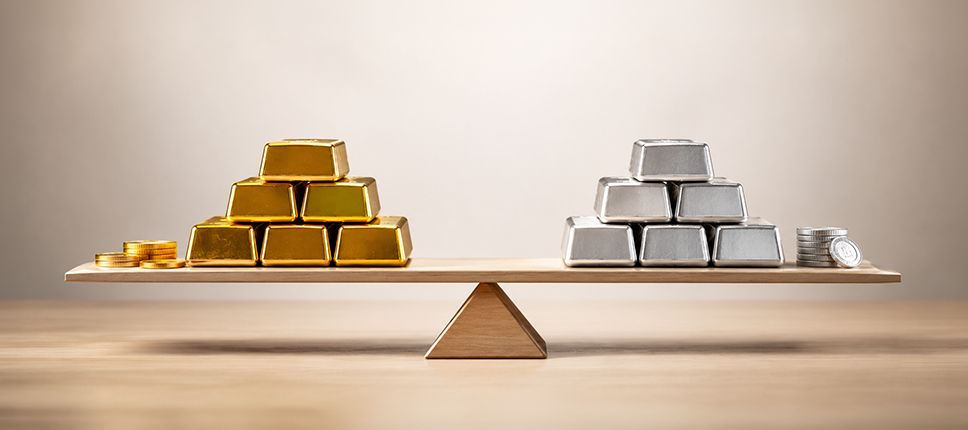
Read the table top-down, and the pattern is clear. On all structural aspects: storage, buying and selling, GST, and how gains are taxed: the two are twins. Where they part ways is behaviour, and this is where gold vs silver comes down to temperament: gold is the calmer, more liquid asset you hold to protect value, while silver is cheaper to enter and swings harder in exchange for a shot at bigger gains. Neither is “better” in the abstract; it depends on the job you want the metal to do.
Tax Treatment: Digital Gold vs Digital Silver in India
One honest note first: taxes on digital gold and digital silver in India are not set out under separate provisions. Neither is defined by name in the Income Tax Act; both are taxed as capital assets exactly like physical gold and silver, so the treatment obeys the general rules for these assets.
When you buy, both attract 3% GST (1.5% CGST + 1.5% SGST), the same rate that applies to gold and silver. It is a one-time charge at purchase.
For capital gains on digital gold and silver, the holding period is crucial. Sell within 24 months, and the gain is short-term, added to your income and taxed at your slab rate. If held for 24 months or more, it is considered long-term and taxed at 12.5% without indexation.
| Tax component | Digital Gold | Digital Silver |
|---|---|---|
| GST on purchase | 3% | 3% |
| Held under 24 months (STCG) | Slab rate | Slab rate |
| Held 24 months or more (LTCG) | 12.5% (no indexation) | 12.5% (no indexation) |
Note: tax rules change from time to time. Confirm the current rate, holding period and any surcharge or cess with the Income Tax Department or a qualified tax advisor before you act.
Price Behaviour and Returns: Gold vs Silver
Gold’s job in a portfolio is stability. It moves less than silver and has long been a store of value and an inflation hedge, which is why it holds up when markets get nervous. Silver does many of the same jobs, but its price is noisier because industrial demand: solar, electronics, and EVs: pushes and pulls it on top of the usual monetary forces. When factories buy more silver, prices can run; when that demand cools, they can fall faster than gold.
A simple tool many investors watch is the gold-to-silver ratio: how many grams of silver it takes to buy one gram of gold. When the ratio is high (historically, readings above about 80 have been considered elevated), silver is often viewed as cheap relative to gold. It is a rough gauge of relative value, not a signal.
Over the last five to ten years, gold has generally been the steadier performer while silver has delivered sharper moves in both directions; that is the trade-off in a nutshell.
Also Read: Digital Silver vs Silver ETF?
Is Digital Gold Regulated? What SEBI Said in November 2025
On 8 November 2025, SEBI issued a public caution stating that “Digital Gold / E-Gold” products marketed as an alternative to physical gold are neither notified as securities nor regulated as commodity derivatives and so operate entirely outside SEBI’s purview.
In practice, the investor-protection mechanisms of the regulated securities market do not apply to digital gold or, by the same logic, digital silver. They are not overseen by SEBI, nor are they RBI-regulated instruments. Contrast that with Sovereign Gold Bonds (issued by the RBI) or Gold ETFs (regulated by SEBI), which sit inside a formal framework with independent custodians and audited systems.
None of this makes digital gold or silver unsafe; the metal is usually held in insured vaults through established refiners, but the safety rests on the platform, not a regulator. Before you invest, check who custodies the metal, whether it is insured, and whether the platform publishes independent third-party audits, because there is no market-wide safety net if a platform fails.
Which Should You Choose? A Guide by Investor Profile
There is no single answer to digital gold vs digital silver, which is better; it depends on who you are as an investor. Use the three profiles below as a decision framework, not a recommendation.
The conservative, long-term investor. If you mainly want to preserve value and sleep easy, digital gold is the steadier, more liquid and more widely accepted choice. Its calmer price behaviour suits goals that are measured in years.
The growth-orientated investor who can handle volatility. If you are comfortable with bigger swings in exchange for higher potential upside, digital silver may appeal, since industrial demand cycles can amplify its moves. The flip side is sharper falls, so size your position according to your risk appetite.
The diversifier. If you would rather not choose, holding both in a set ratio, say 70% gold and 30% silver, spreads risk and captures each metal’s strengths, with occasional rebalancing to keep the mix on track.
As for the question people actually type, should I invest in digital gold or silver right now? Timing is the wrong lens. The better questions are how long you plan to hold, how much volatility you can tolerate, and whether the unregulated status sits comfortably with you. When you line up digital silver vs digital gold, the tax and storage are identical; the real decision is about temperament and time horizon.
Also Read: Gold vs Silver: Which Is Better?
Frequently Asked Questions
Is digital silver safer than digital gold?
Both are backed by physical metal in insured vaults, so storage risk is similar. However, silver prices are more volatile than gold prices because industrial demand adds a second layer of price movement. For capital preservation, digital gold is generally considered more stable.
Can I convert digital silver to physical silver?
Most platforms that offer digital silver allow conversion to physical silver coins or bars, subject to minimum weight thresholds and applicable delivery charges.
Which has better liquidity: digital gold or digital silver?
Digital gold generally has higher liquidity because the gold market in India is larger and more active. Digital silver can also be sold online at live market rates, but the buyer pool is smaller, which may affect resale ease on some platforms.
Is the tax treatment the same for digital gold and digital silver?
Yes. Both attract 3% GST on purchase. Gains are taxed as short-term capital gains at your income slab rate if held for under 24 months and as long-term capital gains at 12.5% (without indexation) if held for 24 months or more.
What is the minimum amount to invest in digital silver?
Many platforms allow you to start investing in digital silver for as little as Rs 10 to Rs 100, similar to digital gold. The exact minimum varies by platform. There is no upper limit on how much you can hold.
The information contained herein is generic in nature and is meant for educational purposes only. Nothing here is to be construed as an investment or financial or taxation advice nor to be considered as an invitation or solicitation or advertisement for any financial product. Readers are advised to exercise discretion and should seek independent professional advice prior to making any investment decision in relation to any financial product. Aditya Birla Capital Group is not liable for any decision arising out of the use of this information.
.svg)


.webp)
