
.gif)
.png)
.png)
.svg)
.svg)
.png)
.svg)

- Digital Silver Meaning: What You Actually Own?
- How Does Digital Silver Differ from Physical Silver?
- Digital Silver vs Digital Gold: Key Differences
- How Digital Silver Works: Step by Step
- The 48-Hour Sell Restriction: What It Means for You
- Is Digital Silver Safe? Regulation, Vault Storage & Investor Protection
- Tax on Digital Silver in India: Capital Gains Rules
- Is Digital Silver a Good Investment? Pros, Cons & Who It Suits
- Where to Buy Digital Silver in India: Platform Options
- Frequently Asked Questions About Digital Silver
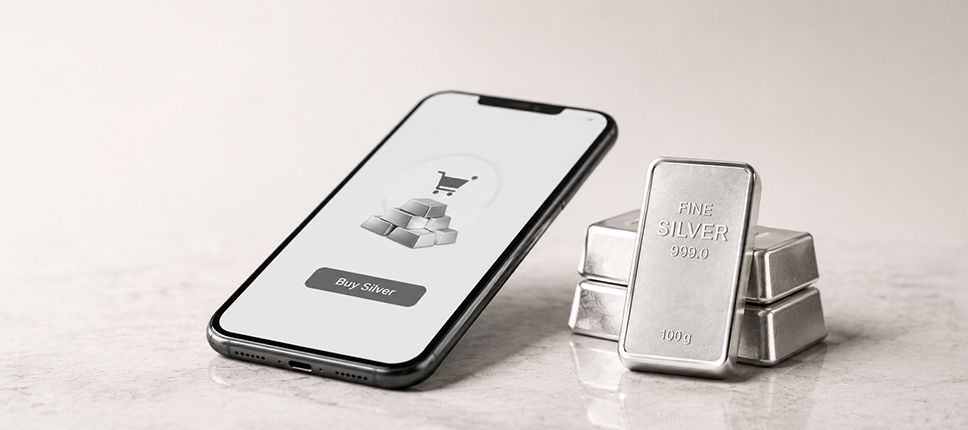
Digital silver is 999-pure silver that you own electronically. For every rupee you invest, a certain amount of real silver is held in a safe vault. There is no fee to use a locker or make a purchase, and you can start with as little as ₹10. You should know the catch right away: you can buy at any time, but you can't sell until you've held on to the product for 48 hours. Also, unlike Silver ETFs, this product is not regulated by SEBI.
This guide tells you what you own, how to buy and sell it, about safety and regulations, tax rules, and how to decide if digital silver is a good investment for you.
Digital Silver Meaning: What You Actually Own?
Digital silver runs on a 1:1 physical backing model. When you invest, say, ₹1,000, that amount is changed at the current price of silver into the same weight of 999-fine silver, which is then stored in a vault that is managed and insured by a third party. It is not a paper promise or a derivative contract. After that, you'll have a digital certificate that says you own that specific weight of metal. It's kind of like a receipt, but it's not a claim on the platform's money.
This distinction matters because the vaulted silver is meant to be legally ring-fenced from the platform's balance sheet, held by an independent trustee or custodian rather than mixed in with the company's own assets. In principle, that separation is what should let an investor's silver survive even if the platform running the app were to shut down, since the metal was never the platform's to begin with.
A simple example illustrates the mechanics: with silver trading at roughly ₹230 per gram, a ₹1,000 investment converts to approximately 4.3 grams of 999-pure silver credited to the investor's digital account, before accounting for the platform's buy spread. That fractional weight is exactly what distinguishes digital silver from buying a physical coin or bar, where the smallest available unit is usually far larger.
How Does Digital Silver Differ from Physical Silver?
| Factor | Digital Silver | Physical Silver |
|---|---|---|
| Storage cost | None - held in a vault on your behalf | Locker rental or home security, plus insurance |
| Minimum buy amount | As low as ₹10 | Typically one full coin, bar, or item |
| Purity guarantee | 999-fine, vault-verified | Depends on hallmark and seller |
| Liquidity | Sellable after 48 hours, via the platform | Depends on finding a buyer or dealer |
| Making charges | None | Apply to coins, bars, and jewellery |
| Redemption | Can convert to physical coins/bars on most platforms | Already physical |
Digital silver removes the storage and making-charge costs that come with owning physical metal, but that convenience is not entirely free - platforms build a spread into their buy and sell prices, which functions as an implicit cost even though no separate fee is charged. Purity is a genuine point of difference too: a digital silver holding is verified against vault records maintained by the platform's trustee, whereas physical silver's purity depends on the hallmark or certification attached at the point of sale, which varies by seller. Most platforms allow investors to redeem their digital holding as physical coins or bars once a minimum weight threshold is reached, so the two forms aren't permanently separate; digital silver can become physical silver later if the investor chooses.
Digital Silver vs Digital Gold: Key Differences
Silver's lower price per gram compared to gold is the most immediate practical difference - it allows meaningfully smaller fractional purchases and makes ₹10-₹100 entry points more useful, since that amount buys a more substantial fraction of a gram of silver than it would of gold. Silver also carries a distinct industrial demand driver that gold largely lacks: solar panels, electric vehicles, and electronics manufacturing consume physical silver, tying its price partly to industrial cycles rather than purely to investment and jewellery demand.
This dual demand base also makes silver more volatile than gold, with sharper price swings in both directions over comparable periods - higher potential gains alongside higher risk. On tax treatment, the two are aligned: digital silver and digital gold follow the same capital gains rules based on holding period, covered later in this guide. Neither metal is inherently the “better” choice - the differences are about risk appetite and price point, not regulation, since neither is SEBI-regulated in its digital form.
How Digital Silver Works: Step by Step
- Open an account and complete KYC: Sign up on a platform offering digital silver - typically a bank app, an NBFC app, or a dedicated bullion platform - and complete a one-time KYC using PAN and Aadhaar.
- Enter the amount in rupees or grams: Most platforms let you specify either how much money you want to invest or how many grams of silver you want to buy.
- Silver is credited to your account: The purchase executes at the live 999-silver price plus the platform's buy spread, and the corresponding weight appears in your digital holding almost immediately.
- The silver is vaulted: Your purchased silver is physically stored in an insured vault managed by an independent trustee, separate from the platform's own operating assets.
- To sell, place a sell order: Once the 48-hour holding window has passed, you can sell back to the platform; proceeds are credited to your linked bank account within the platform's stated settlement window.
- To redeem physically, request delivery: If you'd rather hold the metal itself, you can request delivery as coins or bars, subject to minimum weight thresholds and any applicable delivery charges.
Also Read: What Is Digital Gold & How It Works?
The 48-Hour Sell Restriction: What It Means for You
You can buy digital silver at any time, but selling is only permitted 48 hours after the purchase timestamp - this is one of the most consistent rules across platforms and one of the most-asked questions about the product. The restriction exists mainly for settlement and anti-fraud reasons: it gives the platform and its vault partner a window to reconcile the new purchase against actual vaulted metal and discourages rapid buy-sell cycling (wash trading) that could be used to exploit pricing gaps or platform bugs.
The practical implication is straightforward: digital silver is not built for intraday trading or same-day liquidity needs. If you buy silver in the morning expecting to sell it that afternoon for a quick move in price, the platform simply won't let you. Silver ETFs work differently here - since they trade on a stock exchange, ETF units can be bought and sold on the same trading day, making them the more suitable choice for anyone who values same-day liquidity over the fractional, app-based convenience of digital silver.
Is Digital Silver Safe? Regulation, Vault Storage & Investor Protection
Digital silver's safety rests on four pillars, and it's worth understanding each before investing any meaningful amount.
- First, vault ring-fencing: the physical silver backing your holding is meant to be held by an independent trustee, legally separate from the platform's own balance sheet, so that a platform's business troubles or shutdown shouldn't put your silver at risk - the metal was never the platform's asset to begin with.
- Second, insurance: most reputable platforms insure their vaulted silver against theft and physical damage, adding a further layer of protection on top of the ring-fencing structure.
- Third, purity assurance: reputable providers source 999-fine silver from LBMA-accredited or BIS-certified refiners, giving the purity claim a verifiable basis rather than a marketing statement.
- Fourth, and most important to understand clearly: digital silver is not currently regulated by SEBI or the banking regulator the way mutual funds, Silver ETFs, or bank deposits are.
SEBI issued a formal advisory in November 2025 cautioning investors that digital gold and e-gold products - and by extension the equivalent digital silver structures - are not notified as securities and are not regulated as commodity derivatives, meaning SEBI's investor protection and grievance-redressal mechanisms don't apply to them. The product instead operates under a contractual framework between the investor and the platform, backed by the trustee and vault arrangement rather than by securities-market regulation. This is a real gap compared with Silver ETFs, which are SEBI-regulated end to end. Before investing, check a platform's trustee agreement and vault insurance certificate directly rather than assuming these protections exist by default.
Tax on Digital Silver in India: Capital Gains Rules
Digital silver is treated as a capital asset for income tax purposes, and the tax treatment depends on how long you hold it before selling. If you sell within 24 months of purchase, the gain is a short-term capital gain (STCG), added to your total income for the year and taxed at your applicable income tax slab rate. If you hold for more than 24 months before selling, the gain is a long-term capital gain (LTCG), taxed at a flat 12.5% without the benefit of indexation - the rate and structure that has applied since the Union Budget 2024 changes took effect on 23 July 2024.
Separately from capital gains tax, GST at 3% applies at the time of purchase, the same rate charged on physical silver and gold purchases in India. There is currently no tax deducted at source (TDS) on digital silver sale proceeds, unlike some other financial products.
This is general information rather than personalised advice, and tax rules can vary based on individual circumstances - consult a qualified tax advisor before making decisions based on your specific holding period or transaction history. For a fuller breakdown of silver capital gains rules, including worked examples, see the dedicated guide on tax on silver selling.
Is Digital Silver a Good Investment? Pros, Cons & Who It Suits
Pros: Fractional ownership starting from ₹10 makes it accessible regardless of budget. There are no storage or making charges to erode returns over time. Purity is guaranteed at 999-fine, verified against vault records rather than a physical hallmark you have to trust on sight. Buying and selling happens entirely online, with no need to visit a store. Most platforms allow physical redemption later if you decide you want the metal itself. And silver carries a structural industrial demand tailwind from solar panels, electric vehicles, and electronics manufacturing that pure investment-demand assets don't share.
Cons: The 48-hour sell restriction rules out same-day liquidity, so it isn't suited to short-term trading. The product isn't SEBI-regulated, so it lacks the investor protection mechanisms and grievance redressal available for regulated instruments like Silver ETFs. It generates no income or dividend while held - any return comes purely from the metal's price movement. Silver's price volatility runs higher than gold's, which cuts both ways. And the buy-sell spread built into platform pricing quietly reduces effective returns compared with the headline silver price.
Digital silver tends to suit investors who want small, regular exposure to silver without the hassle of physical storage - someone building a modest position gradually rather than making a single large commitment. It may not suit investors who need same-day liquidity, or who specifically want the investor protections that come with a SEBI-regulated product like a Silver ETF or silver mutual fund.
Where to Buy Digital Silver in India: Platform Options
Digital silver is available through three broad categories of providers. Banks and NBFCs offer it as a feature within their existing mobile banking or lending apps, typically partnering with an external vault operator to hold the underlying metal. Dedicated bullion platforms operate as pure-play digital gold and silver providers, often with their own vault infrastructure and a business built entirely around precious-metal products. Payment apps offer digital silver purchases alongside their core payment features, sometimes with an option for home delivery of physical coins or bars once a minimum weight is reached.
For investors who want a SEBI-regulated route to silver exposure instead, Silver ETFs and silver mutual funds (Fund of Funds investing in those ETFs) are available through standard demat and mutual fund platforms, trading with full securities-market investor protections that digital silver does not currently offer. Minimum investment amounts on digital silver platforms vary - some start as low as ₹10, while others set a ₹100 floor - so it's worth checking the specific minimum before choosing a provider.
Also Read: Silver ETF Taxation in India: Capital Gains Rules Explained (2026)
Frequently Asked Questions About Digital Silver
Can we sell digital silver anytime?
You can buy digital silver anytime. Selling, however, is allowed only after 48 hours from purchase. This holding window exists for settlement and anti-fraud reasons. If you need same-day liquidity, Silver ETFs traded on the stock exchange are a better option.
Can I buy digital silver from a bank?
Yes. Digital silver is offered by banks, NBFCs, and fintech platforms. Each unit is backed 1:1 by real silver stored in secure, insured vaults, legally separate from the platform's own assets. You can buy, sell, or hold it through the provider's app after completing a one-time KYC.
Is digital silver a good investment?
Digital silver suits investors who want small, regular silver exposure without storage costs or making charges. Key advantages: fractional ownership, 999 purity, and a physical redemption option. Key drawbacks: the 48-hour sell restriction, no SEBI regulation, and higher volatility than gold. It works best as a small part of a diversified portfolio, not a primary investment.
Is it safe to buy digital silver?
Digital silver is generally safe on a reputable platform with a verified trustee arrangement and vault insurance, since the silver is meant to be ring-fenced from the platform's balance sheet. However, it isn't regulated by SEBI, unlike Silver ETFs - SEBI issued a formal advisory on this exact gap in November 2025. Check the platform's trustee agreement and insurance certificate before investing.
Which coin is called 'digital silver'?
The term has two unrelated meanings. In cryptocurrency, Litecoin is nicknamed “digital silver” for being a faster, lighter alternative to Bitcoin (often called “digital gold”). In India, “digital silver” refers to commodity-backed, electronically held 999-pure silver - a different product entirely, with no connection to cryptocurrency.
What taxes apply when you sell digital silver in India?
Digital silver is a capital asset. Gains from selling within 24 months are short-term capital gains, taxed at your income slab rate. Gains from selling after 24 months are long-term capital gains, taxed at 12.5% without indexation, under the post-Budget 2024 rules. GST at 3% applies at purchase. Consult a qualified tax advisor for your specific situation.
How is digital silver different from physical silver?
Digital silver has no storage costs, no making charges, and allows fractional buying from as little as ₹10. Physical silver requires secure storage, carries making charges on coins and bars, and needs purity verification at purchase or resale. Both are backed by real silver, and digital silver can be redeemed as physical coins or bars on most platforms.
Note: Digital silver is not regulated by SEBI or the RBI . Silver price used in the worked example is illustrative and fluctuates daily.
The information contained herein is generic in nature and is meant for educational purposes only. Nothing here is to be construed as an investment or financial or taxation advice nor to be considered as an invitation or solicitation or advertisement for any financial product. Readers are advised to exercise discretion and should seek independent professional advice prior to making any investment decision in relation to any financial product. Aditya Birla Capital Group is not liable for any decision arising out of the use of this information.
.svg)


.webp)
