
.gif)
.png)
.png)
.svg)
.svg)
.png)
.svg)

- What Is a BIS Hallmark on Silver?
- Silver Purity Grades: What the Numbers Mean
- How to Check a Silver Hallmark: Step-by-Step
- Verifying the HUID Online via the BIS CARE App
- Hallmarks on Silver Jewellery, Coins, and Bars: Key Differences
- What to Do If a Silver Item Has No Hallmark
- Why Hallmark Status Matters for Silver's Resale Value
- Get Silver online without any hassle
- Frequently Asked Questions on Silver Hallmarking
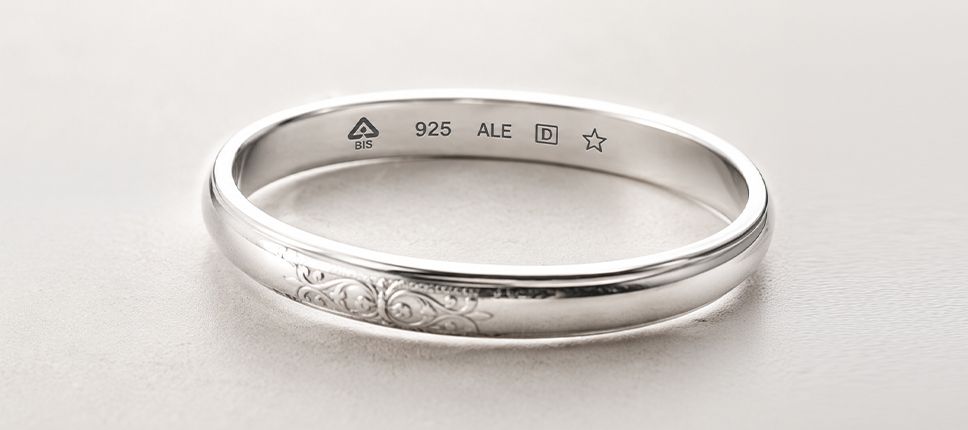
A BIS hallmark on silver is a government-certified purity mark issued by the Bureau of Indian Standards after an item is tested at an accredited assay centre. Since September 1, 2025, silver jewellery and artefacts in India have moved to a new HUID-based hallmarking system, similar to the one already used for gold. This guide explains how to read the three marks and verify them yourself.
What Is a BIS Hallmark on Silver?
A BIS hallmark on silver is an official purity certification applied by the Bureau of Indian Standards after a silver item is tested at a BIS-recognised Assaying and Hallmarking Centre. It tells you, with government backing, exactly how pure the silver in a piece actually is.
From September 1, 2025, silver hallmarking in India moved to a Hallmark Unique Identification (HUID) system under standard IS 2112:2025, replacing the older four-mark system. This mirrors the approach already used for gold jewellery, where HUID-based hallmarking has been in place since 2021.
Under this system, each hallmark has three components – the BIS Standard Mark with the word “SILVER”, a purity or fineness grade and a unique HUID code. Together, these three marks help a buyer to verify the purity of the item as well as the specific jeweller and the assay centre that certified it.
Silver Purity Grades: What the Numbers Mean
Fineness refers to the proportion of pure silver in an item, expressed as parts per 1000. A grade of 925, for instance, means 925 parts out of 1000 are pure silver, with the remaining 75 parts typically made up of copper or another metal added for strength.
Under the revised BIS standard, silver hallmarking recognises seven purity grades:
| Grade | Fineness | Typical Use |
|---|---|---|
| 800 | 80.0% pure | Lower-purity silver artefacts and utensils |
| 835 | 83.5% pure | Silver artefacts, some jewellery |
| 925 | 92.5% pure | Sterling silver - the most common jewellery grade |
| 958 | 95.8% pure | Britannia silver, fine jewellery |
| 970 | 97.0% pure | High-purity jewellery and artefacts |
| 990 | 99.0% pure | Investment-grade coins and bars |
| 999 | 99.9% pure | Fine silver bars, highest investment grade |
925 remains the grade most Indian buyers will encounter, since it offers a practical balance of purity and durability for jewellery. Coins and bars intended for investment are more commonly stamped at 990 or 999, reflecting their near-pure silver content.
How to Check a Silver Hallmark: Step-by-Step
Checking a silver hallmark takes only a few minutes if you know where to look and what each mark means.
1. Locate the hallmark:
On jewellery, marks are usually stamped on the clasp, the inner band, or a small attached tag. On coins, look at the reverse face or along the edge. On bars, the marks are stamped on the flat surface. A magnifying glass is useful when examining small or detailed pieces of jewelry where the stamp may be very small.
2. Find the BIS Standard Mark:
Look for the mark bearing the word "SILVER" alongside the triangular BIS symbol. This confirms the item was tested and certified at a BIS-accredited assay centre, rather than simply stamped by the manufacturer.
3. Confirm the purity grade:
Look for the three-digit fineness number, like 925 or 990, adjacent to the BIS mark. This number signifies the precise amount of pure silver in the item, out of 1000 parts.
4. Note the HUID:
Each hallmarked piece is marked with a unique six-character alphanumeric code (HUID) that no other ever hallmarked piece has. Make a note of it or photograph it before you make your purchase.
5. Verify online:
Open the BIS CARE app or visit the BIS website and enter the HUID to confirm the registered jeweller, the assay centre, and the item's certified details before you finalise the purchase.
Verifying the HUID Online via the BIS CARE App
The BIS CARE app, available for both Android and iOS, lets any buyer enter a six-digit HUID and instantly retrieve the item's registered details - including the jeweller's name, the certified silver grade, and the assay centre that performed the testing. This check is free and typically takes under a minute.
If you do not have a smartphone handy, the same HUID lookup is available through the BIS website portal, so you can still verify an item's hallmark details from any browser. Running this check before you pay is the most reliable way to confirm that a hallmark is genuine rather than simply printed on the item.
Also Read: How to Check Silver Purity
Hallmarks on Silver Jewellery, Coins, and Bars: Key Differences
The same three BIS marks - the BIS Standard Mark, the purity grade, and the HUID - apply across all silver product categories, but where they appear differs by product type.
On jewellery, marks are typically found on the clasp, the inner band of a ring or bangle, or on a small tag attached to the piece. Because jewellery pieces are often delicate or ornately designed, the stamp can be small, so a magnifying glass helps confirm the details clearly.
On coins, the marks generally appear on the reverse face or along the edge, away from the primary design or motif on the front. On bars, marks are stamped directly onto the flat surface, usually alongside the manufacturer's own logo and the item's weight, so it is worth distinguishing the BIS marks from the manufacturer's separate branding. Silver utensils and decorative artefacts fall under the same hallmarking framework as jewellery, so the same verification steps apply to these items as well.
What to Do If a Silver Item Has No Hallmark
Not every silver item on the market carries a hallmark today, since the current system remains a phased rollout rather than a blanket requirement on every seller and product. Still, choosing hallmarked silver gives you a verifiable purity guarantee that an unmarked item simply cannot offer.
If you come across a silver item with no hallmark, there are a few practical steps worth taking. First, ask the jeweller directly for their BIS registration number, which any compliant, registered seller should be able to provide. Second, request a purity certificate for the specific item if a hallmark is not present. Third, if you suspect a seller is misrepresenting an item's purity or registration status, you can raise a complaint through the BIS CARE app's complaint feature or contact the National Consumer Helpline at 1800-11-4000.
Why Hallmark Status Matters for Silver's Resale Value
Hallmarked silver tends to command a more consistent and reliable resale price, because both the buyer and the dealer can verify its purity through the HUID without needing separate, independent testing at the point of resale.
Non-hallmarked silver, by contrast, often gets accepted at a discount by organised buyers, or may be declined altogether, since the purity has to be re-verified through testing before a fair price can be offered. This makes hallmark status a practical factor in protecting the value of your purchase over time, not just a formality at the point of sale. Choosing certified silver from the outset can save you the cost and inconvenience of purity disputes later, whether you are buying for personal use or as part of a longer-term holding.
Also Read: Types of Silver Explained
Get Silver online without any hassle
Purchasing Silver online with Aditya Birla Capital means that you don’t need to worry about purity, security or insurance. Digital Silver is secure, and can be purchased easily by you with just ₹10.
Frequently Asked Questions on Silver Hallmarking
Is BIS hallmarking mandatory for all silver items in India?
Silver hallmarking moved to a new HUID-based system from September 1, 2025, aligning with the existing gold hallmarking framework. As of now, hallmarking is being rolled out in phases rather than applied uniformly to every seller, and the BIS is evaluating full mandatory enforcement. Buyers should still prefer hallmarked items wherever available.
What does 925 mean on a silver item?
925 is the fineness of sterling silver, which means that the item is made up of 925 parts pure silver out of 1000 or 92.5% purity. The remaining 7.5% is usually copper or some other metal that is added to strengthen and make the silver more durable. It is the most commonly used grade for silver jewellery in India.
Can I check a silver hallmark without the BIS CARE app?
Yes. The BIS website has an online HUID lookup tool that works on any browser, so a smartphone app is not required. Enter the six-digit HUID printed on the item to retrieve the registered jeweller's name, the certified silver grade, and the assay centre details.
Are silver coins and bars also hallmarked?
Yes, registered dealers can sell silver coins and bars that bear the same three BIS marks as jewellery - the BIS Standard Mark, the fineness grade and the HUID. The marks on coins are usually on the reverse face or edge; on bars, they are stamped on the flat surface, often beside the manufacturer’s logo and weight.
What is the difference between a hallmark and a purity stamp?
A purity stamp is simply a number, such as 925, printed by the manufacturer with no independent verification behind it. A BIS hallmark includes that same number plus the official BIS Standard Mark and a unique HUID, all applied only after testing at a BIS-accredited assay centre - giving it government-backed assurance a plain purity stamp does not carry.
The information contained herein is generic in nature and is meant for educational purposes only. Nothing here is to be construed as an investment or financial or taxation advice nor to be considered as an invitation or solicitation or advertisement for any financial product. Readers are advised to exercise discretion and should seek independent professional advice prior to making any investment decision in relation to any financial product. Aditya Birla Capital Group is not liable for any decision arising out of the use of this information.
.svg)


.webp)
