.png)
.png)
.svg)
.svg)
.png)
.svg)

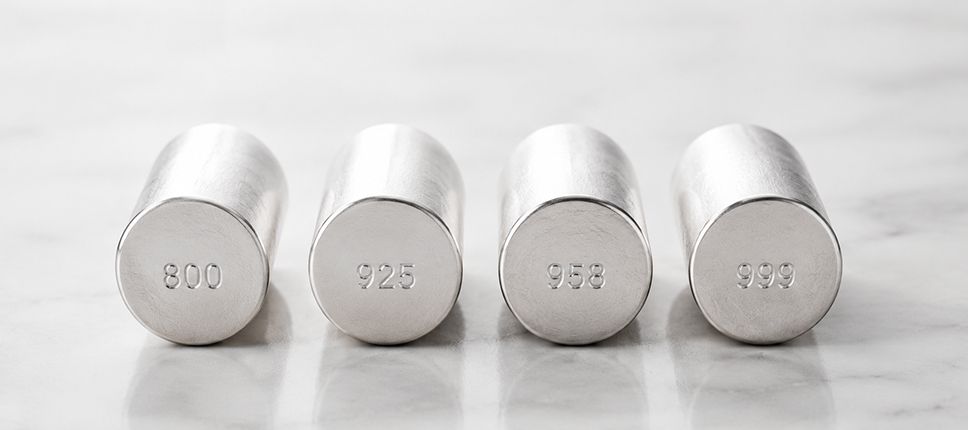
Silver is not a single uniform metal - there are several distinct grades of silver, each with a different purity level, price point, and best use case. A 999 fine silver bar, a 925 sterling silver ring, and a silver-plated decorative item can all be called "silver," yet they differ enormously in actual metal content and value.
This guide walks through every major type of silver, what the purity numbers actually mean, how to identify genuine silver using hallmarks and simple tests, and which grade suits jewellery, investment, or budget gifting. By the end, you will know exactly which type of silver fits your specific need.
What Does Silver Purity Mean?
Silver purity is expressed in millesimal fineness , a simple system that indicates purity in parts per thousand. A fineness of 999 means 999 parts of every 1000 are pure silver, or 99.9%. A fineness of 925 means 925 parts out of 1000, or 92.5% pure silver.
Pure silver on its own is very soft, so manufacturers alloy it with other metals -most commonly copper - to add strength and durability. The remaining percentage in any grade below 999 is almost always this alloy content, not filler or impurity in a negative sense; it is a deliberate design choice that makes silver practical for daily use, particularly in jewellery.
Most genuine silver items carry a hallmark stamp somewhere on the piece, showing the fineness number directly. This stamp is the single most reliable way to know what grade of silver you are actually holding, which is why understanding these numbers matters before you buy anything described as silver.
Silver Grades Chart: All Major Types of Silver at a Glance
| Grade Name | Fineness Mark | Purity % | Common Uses | Typical Hallmark Stamp |
|---|---|---|---|---|
| Fine Silver | 999 | 99.9% | Investment bars, coins, bullion | 999 or 999.9 |
| Britannia Silver | 958 | 95.8% | Fine flatware, some jewellery | 958 |
| Sterling Silver | 925 | 92.5% | Jewellery, tableware | 925 or S925 |
| Indian 916 Silver | 916 | 91.6% | Some Indian jewellery and coins | 916 |
| Coin Silver | 900 | 90.0% | Historical coins, some artefacts | 900 |
| European/Continental Silver | 800–850 | 80.0–85.0% | Older European jewellery, artefacts | 800 or 835 |
| Silver-Filled | Varies | Varies | Thin solid layer over base metal; affordable jewellery | Rarely stamped as silver |
| Silver-Plated | Trace only | Trace only | Thin coating over base metal; decorative items, budget jewellery | EP, EPNS |
| Nickel Silver | 0% | 0% | Contains no silver at all; low-cost jewellery, decorative items | No genuine silver hallmark |
Types of Silver Explained: From Fine Silver to Silver-Plated
Each grade of silver serves a different purpose, and understanding the trade-offs between them makes it much easier to buy with confidence.
Fine Silver - 999
Fine silver is 99.9% pure, making it the highest commonly available silver grade. This purity comes at a cost: fine silver is the softest grade on the market, bending and scratching easily under normal handling, which is why it is rarely used for jewellery meant for daily wear.
Its primary use is investment - bars, coins, and bullion are typically minted in 999 or 999.9 fine silver, since investors want maximum metal content rather than durability. Fine silver bars and coins traded in India generally follow MCX and international commodity benchmarks for pricing, and the hallmark to look for is simply "999" or "999.9" stamped on the item.
Sterling Silver - 925
Sterling silver is an alloy of 92.5% pure silver and 7.5% copper or other metal and is the most popular silver grade of jewellery in India and the world over. The addition of copper provides sterling silver with the strength and durability to make rings, chains, bangles, and other pieces that are worn often.
The downside is that sterling silver may tarnish over time, as the copper in the alloy reacts with air and moisture, oxidizing and creating a dull or darkened surface. This is a normal characteristic of the metal and not a fault, and can mostly be reversed by regular cleaning. Look for a "925" or "S925" stamp to identify sterling silver. In India, BIS-hallmarked 925 silver gives buyers an added layer of purity assurance beyond the manufacturer's own stamp.
Indian Silver - 916
916 silver, at 91.6% purity, appears in some Indian jewellery and coin contexts, sitting just below sterling silver in fineness. While 925 remains the dominant standard for jewellery, 916 is worth recognising if you come across it on a hallmark, since it reflects a slightly different alloy ratio rather than an error or lower-quality product.
Britannia Silver - 958
Britannia silver is 95.84% pure, placing it between sterling and fine silver in purity. It is slightly softer than sterling because of its higher silver content, and it is used occasionally for fine flatware and some higher-end jewellery pieces. Britannia silver is relatively uncommon in Indian retail compared to 925 and 999, but it is worth recognising the "958" hallmark if you encounter it, particularly on imported or antique pieces.
Coin Silver - 900
Coin silver, at 90% purity with 10% copper, was historically the standard used for minting silver coins in several countries. It is harder than sterling silver but less common in current retail markets, having largely been superseded by other grades for both coins and jewellery. If you come across a "900" hallmark, it most often indicates an older coin or artefact rather than a contemporary piece.
Silver-Plated and Silver-Filled Items
Silver-plated items consist of a thin layer of actual silver electroplated over a base metal, typically brass or copper. This plating is only a surface coating, and it wears off with regular use, eventually exposing the base metal underneath - which is why silver-plated pieces are considerably cheaper than solid silver.
Silver-filled items use a thicker bonded layer of silver over a base metal core, making them noticeably more durable than plated pieces, though still not equivalent to solid sterling or fine silver. Both formats are significantly cheaper than solid silver, and buyers should be careful not to confuse either with genuine solid silver jewellery. Look for stamps like "EP" or "EPNS" (electroplated nickel silver), or simply the absence of a genuine silver fineness hallmark, as a signal that a piece is plated or filled rather than solid.
Nickel Silver (German Silver) - No Real Silver
Despite its name, nickel silver contains zero actual silver. It is an alloy made entirely of nickel, copper, and zinc, valued for its silvery appearance rather than any silver content. The naming is genuinely misleading, and it commonly turns up in low-cost jewellery, decorative items, and costume pieces sold without a real silver hallmark.
Beyond the value mismatch, nickel silver can cause skin reactions in people with nickel sensitivity, which is a separate reason to identify it before buying, particularly for jewellery worn directly against the skin. If a piece is sold cheaply as "silver" but carries no genuine fineness hallmark, there is a reasonable chance it is nickel silver rather than an actual silver alloy - checking for a hallmark before purchase is the simplest way to avoid this mismatch.
Also Read: 925 Sterling Silver: Meaning and Purity
How to Identify Silver Quality: Hallmarks, Stamps, and Tests
Confirming what grade of silver you are actually buying comes down to three methods, ranked from most to least reliable.
Hallmark stamps are the most dependable method. In India, the Bureau of Indian Standards (BIS) certifies silver purity through an official hallmark applied at an accredited assay centre, distinct from a manufacturer's own stamp. A BIS-hallmarked item typically shows the fineness grade - such as "925," "999," or "916" - alongside the BIS mark itself. These stamps are usually found on the clasp or inner band of jewellery, the edge of a coin, or the flat face of a bar; a magnifying glass helps for small or intricate pieces.
Simple home tests offer a rough secondary check, though none are fully conclusive on their own. The magnet test relies on the fact that genuine silver is not magnetic - if a magnet sticks firmly to an item claimed to be silver, it likely contains iron or steel and is not genuine. The ice test relies on silver's unusually high thermal conductivity: a genuine silver piece placed against ice will feel it melt noticeably faster than it would against most other metals, since silver conducts heat rapidly. For buyers who want more certainty, an acid test - applying a small drop of testing acid to an inconspicuous spot - can help confirm purity, though this is typically best left to a jeweller or assayer rather than attempted at home.
Buying from certified sellers remains the most practical safeguard overall. Look for BIS-certified retailers, and do not hesitate to ask for a purity certificate alongside your purchase receipt, particularly for higher-value items like investment bars or coins. If you want to skip the purity testing and invest in silver instantly – you could explore investing in Digital Silver via Aditya Birla Capital.
Which Type of Silver Is Right for You?
The right silver grade depends entirely on why you are buying it.
1. Buying silver jewellery
925 sterling silver is the usual choice for rings, chains, bangles and other everyday pieces of jewellery, as it gives a good balance of high silver content and the durability needed for frequent use. Always check for a BIS hallmark accompanying the “925” fineness mark to ensure the purity claim is backed
2. Buying silver as an investment
999 fine silver bars or coins are the standard for investment purposes, since investors prioritise maximum silver content over durability - these items are not meant to be worn or handled roughly. Silver trades close to ₹2,35,000 per kilogram (around ₹235 per gram) as of early July 2026, though this rate moves daily with international spot prices and the rupee-dollar exchange rate, so check current MCX or market rates before finalising a purchase.
3. Budget gifting or decorative items
Silver-plated items are a reasonable choice when the goal is an affordable decorative piece rather than a long-term asset, but set realistic expectations: the plating will wear over time, and these items carry negligible resale value tied to their silver content.
Silver functions as both a wearable asset and an investment instrument in India, and understanding purity is the foundation for making a sound decision in either direction - a jewellery buyer and an investor are fundamentally looking for different things, even though both are technically "buying silver."
Also Read: 999 Fine Silver: What the Purity Mark Means
Frequently Asked Questions About Types of Silver
What is the most common type of silver used in jewellery?
925 sterling silver is the standard for jewellery in India and globally. 92.5% silver and 7.5% other metals (usually copper) so that it is durable enough to wear everyday, but still has a high silver content. Look for the hallmark stamp of '925'.
What does 925 mean on silver?
The number 925 is a fineness mark indicating that the metal contains 925 parts of silver per 1000, or 92.5% pure silver. The remaining 7.5% is usually copper. This is the international standard for sterling silver.
Is nickel silver real silver?
No. Nickel silver (also called German silver) contains no silver at all. It is an alloy of nickel, copper, and zinc. The name is misleading. If a piece has no hallmark and is sold cheaply as "silver," it may be nickel silver. Be careful if you are sensitive to nickel.
Which silver grade is best for investment?
999 fine silver (99.9% pure) is the standard for investment-grade silver bars and coins. It is traded on commodity exchanges and its price tracks the international silver spot rate. For investment purposes, always buy from a certified seller and check for a purity certificate.
How do I check if silver is genuine?
The best way is to look for a hallmark stamp, like “925” or “999.” In India, BIS-hallmarked silver provides an extra level of assurance. Easy home tests include the magnet test (real silver is not magnetic) and the ice test (silver transfers heat very quickly). For certainty, visit a certified assayer.
What is the difference between fine silver and sterling silver?
Fine silver is 99.9% pure (marked 999) and is very soft - ideal for investment bars and coins but not practical for everyday jewellery. Sterling silver is a 92.5 per cent pure silver alloyed with copper to give it strength and is the standard choice for rings, chains and bangles (marked 925).
The information contained herein is generic in nature and is meant for educational purposes only. Nothing here is to be construed as an investment or financial or taxation advice nor to be considered as an invitation or solicitation or advertisement for any financial product. Readers are advised to exercise discretion and should seek independent professional advice prior to making any investment decision in relation to any financial product. Aditya Birla Capital Group is not liable for any decision arising out of the use of this information.
.svg)


.webp)
