
.gif)
.png)
.png)
.svg)
.svg)
.png)
.svg)

- What Is Digital Silver?
- Why Silver Demand Is Rising in 2026
- Silver's Role in Clean Energy and Electronics
- Silver Price Outlook for 2026
- Key Benefits of Investing in Digital Silver
- Digital Silver vs Physical Silver vs Silver ETFs: Which Suits You?
- Risks and Things to Check Before You Invest
- Tax Treatment of Digital Silver in India
- Can You Convert Digital Silver to Physical Silver?
- How to Start Investing in Digital Silver
- The Bottom Line
- Frequently Asked Questions About Digital Silver
Digital silver can be a worthwhile investment in 2026 for Indian investors seeking low-cost, storage-free exposure to silver's price growth, but it carries price volatility, a regulatory gap compared to SEBI-regulated products, and a 3% GST cost on purchase. Silver ETFs offer a more regulated alternative for long-term investors.
Rising industrial demand from solar, electric vehicles, and electronics is a key reason silver has drawn investor attention this year, alongside the fact that digital silver removes the hassle of storage and lets you start with as little as ₹100. This guide covers what digital silver is, how the 2026 price outlook looks after a volatile first half of the year, its benefits and risks, tax treatment in India, and how it compares with physical silver and silver ETFs. By the end, you should have a clear framework for deciding whether digital silver fits your portfolio and risk appetite.
What Is Digital Silver?
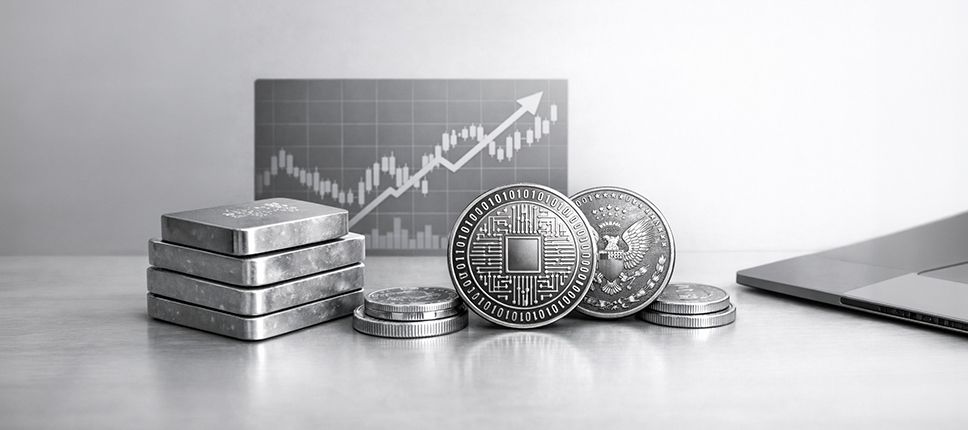
Digital silver is a digital form of physical silver, completely backed by 999 fine silver stored in insured vaults. When you buy digital silver, you are buying a certain amount of silver in grams, rather than a financial derivative or a promise of future delivery. Most platforms allow investors to buy digital silver with as little as ₹100, making it accessible for first-time investors who may not be able to afford a full coin or bar.
You will find your holding in a digital wallet on the app or website of the platform, which will update in real time as the market price varies. Digital silver isn’t the same as a silver ETF or mutual fund. An ETF is a security traded on the stock exchange and regulated by SEBI, while digital silver is a direct commodity holding facilitated by a private platform and its vault partner. Both offer exposure to the price of silver, but the ownership structure, oversight and redemption process vary.
Why Silver Demand Is Rising in 2026
Three industrial trends are driving silver demand this year. Solar panel manufacturing uses silver paste in photovoltaic cells, and while solar-linked demand growth has slowed compared with 2024 and 2025, panel production remains a large consumer of the metal. Electric vehicles use silver in battery contacts, sensors, and charging infrastructure, a use case that keeps expanding as EV sales grow. Electronics, from smartphones to circuit boards, add a third layer of steady demand.
The Silver Institute has flagged a market deficit for a sixth consecutive year, meaning industrial and investment demand has outpaced mine supply. Because most silver is mined as a byproduct of copper, lead, and zinc operations rather than from dedicated silver mines, supply cannot easily expand just because prices rise. Recycled silver from industrial scrap and old jewellery adds some supply back into the market, but it has not been enough on its own to close the gap.
The gold-to-silver ratio is a commonly used valuation signal: it measures how many ounces of silver it takes to buy one ounce of gold. The long-term average sits between 60:1 and 70:1, and as of mid-2026 the ratio was near 69:1, close to the upper end of that historical range. A high ratio has historically suggested silver is undervalued relative to gold, though it is a reference point rather than a price prediction.
Silver's Role in Clean Energy and Electronics
Silver is a critical input in solar photovoltaic panels, EV battery and charging systems, and everyday consumer electronics. A significant share of global silver demand now comes from these industrial applications rather than from jewellery or coins. Unlike gold, whose price is driven mainly by monetary and safe-haven demand, silver's price is partly tied to industrial production cycles. This adds a growth dimension to the investment case, but it also means silver prices can fall when industrial activity or specific segments like solar installations slow down, as happened for part of 2026.
Also Read: Gold vs Silver: Which Is Better?
Silver Price Outlook for 2026
Silver had an unusually volatile first half of 2026. It touched an all-time high of $121.64 per troy ounce on January 29, 2026, before correcting sharply on repriced US Federal Reserve rate expectations, a pullback in gold, and signs of softer near-term industrial demand. By mid-to-late July 2026, spot silver was trading in roughly the $58–60 per troy ounce range, well below both the January peak and most analysts' full-year average forecasts.
Institutional forecasts for the 2026 full-year average still sit above the current spot price. A Reuters poll of analysts put the 2026 average near $79.50 per troy ounce, J.P. Morgan has forecast an average around $81, and HSBC has projected around $75. Other banks are more cautious, with some full-year average estimates closer to $56–65. This spread illustrates that even well-resourced forecasters disagree meaningfully on where prices settle, and actual outcomes can diverge from any single estimate.
In India, silver was trading at roughly ₹235–260 per gram through July 2026, equivalent to about ₹2.35–2.6 lakh per kilogram, though the rupee price also moves with the USD-INR exchange rate and not just international silver prices. Given how sharply prices have swung this year, short-term volatility should be treated as normal rather than an anomaly, and returns should never be treated as guaranteed.
Key Benefits of Investing in Digital Silver
Digital silver offers several practical advantages over buying physical silver outright.
- Low entry point. You can start from as little as ₹100, so you do not need to save up for a full coin or bar before investing. This makes it easier to invest small amounts regularly, similar to a SIP in a mutual fund.
- No storage or insurance cost. The silver backing your holding sits in insured vaults managed by the platform's partner, so you avoid locker fees or the risk of keeping metal at home.
- 999 purity guaranteed. Digital silver is typically certified at 999 purity, removing the hallmarking uncertainty that can come with buying physical jewellery from unfamiliar sellers.
- Instant liquidity. You can sell your holding at live market prices during trading hours, without needing to find a buyer for physical metal.
- Portfolio diversification. Silver often moves differently from equities and other financial assets, so a modest allocation can act as a partial hedge during periods of stock market weakness.
These benefits make digital silver easier to access than physical silver, but they do not remove the underlying price risk or the platform-related considerations discussed below.
Digital Silver vs Physical Silver vs Silver ETFs: Which Suits You?
| Factor | Digital Silver | Physical Silver | Silver ETF |
|---|---|---|---|
| Minimum investment | As low as ₹100 | Cost of at least one coin/bar | Price of one ETF unit |
| Storage cost | None (vault-held by platform) | Locker or home storage cost | None (held in demat form) |
| Liquidity | Sell anytime on the platform | Depends on finding a buyer | Traded on exchange during market hours |
| Purity assurance | Typically 999, platform-certified | Varies; hallmarking required | Backed by exchange-approved vaults |
| Regulatory oversight | Not currently regulated by SEBI | Not applicable (commodity purchase) | Regulated by SEBI |
| Tax treatment | 3% GST on purchase, capital gains on sale | 3% GST on purchase, capital gains on sale, plus making charges | Capital gains on sale; no GST |
| Conversion to physical | Usually possible above a minimum quantity | Already physical | Not directly convertible |
Digital silver tends to suit small, frequent investors who want flexibility and a low starting amount without worrying about storage. Silver ETFs suit long-term investors who prioritise SEBI-regulated market exposure and want their holding in a demat account alongside other securities. Physical silver suits those who specifically want a tangible asset, such as for gifting or traditional use, and are willing to pay for storage and making charges.
One point worth flagging clearly: digital silver platforms are not regulated by SEBI in the way silver ETFs and mutual funds are. This distinction has drawn scrutiny in online investor communities, where the lack of a formal regulator for digital gold and silver products is a recurring concern. Investors who want maximum regulatory protection may prefer the ETF route, even though it typically requires opening a demat account. Some investors choose to split their silver allocation across more than one route to balance convenience against regulatory comfort.
Risks and Things to Check Before You Invest
Digital silver has real advantages, but it is not risk-free.
Price volatility. Silver is historically more volatile than gold, and 2026 has been a clear example of that: the metal moved from an all-time high above $120 an ounce in January to roughly half that level by July. Short-term price drops of 10–20% are not unusual, so digital silver is better suited to investors with a multi-year horizon than to those seeking quick gains.
Regulatory gap. Digital silver is not currently regulated by SEBI. This means investors are relying on the platform's own trust structure, its vault partner, and its trustee arrangements rather than a formal market regulator's oversight.
Platform risk. If a platform were to shut down or face financial difficulty, redemption of your holding could become complicated. A platform with an independent trustee and a clearly disclosed vault arrangement reduces, though does not eliminate, this risk.
Buy-sell spread. The price at which you buy digital silver and the price at which you can sell it back typically differ. This spread affects your real returns, so check it before investing, particularly if you plan to trade frequently rather than hold long-term.
There is also the 3% GST charged on purchase, which is a real, upfront cost that reduces your effective returns from day one. Investors who buy and sell frequently should factor both the GST and the buy-sell spread into their expected returns, since these costs compound over multiple transactions.
Before choosing a platform, verify: whether the vault trustee is independent of the platform itself, whether purity is certified by an accredited body such as an NABL-accredited lab, what the redemption process looks like, and what customer support is available if something goes wrong.
Tax Treatment of Digital Silver in India
Digital silver has two separate tax touchpoints that investors should understand upfront.
GST at purchase. A 3% Goods and Services Tax applies when you buy digital silver, the same rate that applies to physical silver and gold in India. This is charged on top of the metal price and directly reduces your effective return, since you need the silver price to rise by more than 3% just to break even after this cost.
Capital gains tax at sale. If you hold digital silver for less than 36 months, gains on sale are taxed as short-term capital gains at your applicable income tax slab rate. Held for 36 months or more, gains are taxed as long-term capital gains at 20% with indexation benefit, which adjusts your purchase cost for inflation before calculating tax.
Tax rules can change with future budgets, so confirm the current treatment with a qualified tax advisor before investing a significant amount. Keeping a record of your purchase dates and amounts will also make it easier to calculate holding periods and gains accurately at the time of filing.
Can You Convert Digital Silver to Physical Silver?
Yes, most digital silver platforms allow you to convert your holding into physical coins or bars. The typical process has four steps: accumulate a minimum quantity, which platforms commonly set at 10 to 50 grams; request delivery or, where available, in-store pickup; pay minting and delivery charges, which vary by platform and add to your final cost; and receive delivery within a few working days of your request being processed.
It is worth keeping in mind that the final cost of physical silver delivered to you will be higher than your digital holding's stated value, because of these minting and delivery charges. If taking physical delivery is part of your plan, check the specific redemption terms, minimum quantities, and charges of a platform before you start investing through it.
How to Start Investing in Digital Silver
Getting started with digital silver typically follows five steps.
- Choose a platform that stores silver in independently trusteed, insured vaults with purity certified by an accredited lab.
- Complete KYC, which usually requires your PAN and Aadhaar details.
- Add funds using UPI, net banking, or a debit card.
- Enter the amount you want to invest, either in rupees or in grams, and confirm the purchase.
- Track your holding through the platform's digital wallet or portfolio view, and set a personal review schedule so you revisit your allocation periodically rather than only when prices move sharply.
For investors who prefer a SEBI-regulated route to silver exposure, Aditya Birla Capital's portfolio includes silver ETFs and mutual fund options that offer similar price exposure within a regulated framework. Comparing both routes against your own risk appetite and investment horizon is a reasonable step before committing money to either.
The Bottom Line
Digital silver removes two common barriers to investing in silver: the need for storage and the need for a large upfront amount. That accessibility, combined with structural industrial demand from solar, EVs, and electronics, makes a reasonable case for a modest allocation as part of a diversified portfolio. At the same time, 2026's price swing from an all-time high to roughly half that level is a reminder that silver can move quickly in both directions. Investors who want SEBI-regulated exposure, or who are uncomfortable with the current regulatory gap around digital silver platforms, may prefer silver ETFs or mutual funds instead, or use both routes side by side.
Also Read: Best Ways to Invest in Silver in India
Frequently Asked Questions About Digital Silver
Will digital silver go up in value?
Silver has a wide range of industrial uses, particularly in electronics and clean energy, and many analysts expect prices to trend higher over the medium term as this demand grows. However, 2026 has shown how volatile silver can be in the short term, with prices roughly halving from January's all-time high by July. A multi-year horizon reduces the impact of these swings.
What will silver be worth in 5 years?
Institutional forecasts for the rest of 2026 range widely, from roughly $56–65 per troy ounce on the cautious end to above $80 on the bullish end. Five-year projections are even less certain and should be treated as scenarios rather than guarantees, since silver prices can move sharply in either direction.
Can I convert digital silver to physical silver?
Yes. Most platforms let you convert your digital silver holdings into physical coins or bars once you accumulate a minimum quantity, typically 10 to 50 grams. You will pay minting and delivery charges, so the physical silver will cost more than your digital holding's value. Check your platform's redemption terms before investing.
Should I buy digital silver now in 2026?
Digital silver suits investors who want silver exposure without storage or insurance costs, starting from as little as ₹100. After a sharp correction from January's highs, prices in mid-2026 are well below most analysts' full-year average forecasts, though outcomes remain uncertain. Silver is volatile and digital silver is not SEBI-regulated, so weigh your risk appetite and time horizon before deciding.
How high will silver go in 2026?
Forecasts vary considerably. A Reuters poll of analysts projected a 2026 average near $79.50 per troy ounce, while J.P. Morgan and HSBC have projected averages around $81 and $75 respectively. Other banks put the average closer to $56–65. Actual prices have already swung from an all-time high above $120 to around $58–60 by mid-2026, underlining how much these estimates can diverge from reality.
Is digital silver regulated in India?
Digital silver is not currently regulated by SEBI, unlike silver ETFs or mutual funds. Investors rely on the platform's vault arrangements and trustee agreements rather than a market regulator. For a regulated route to silver exposure, SEBI-supervised silver ETFs listed on Indian stock exchanges offer greater investor protection.
The information contained herein is generic in nature and is meant for educational purposes only. Nothing here is to be construed as an investment or financial or taxation advice nor to be considered as an invitation or solicitation or advertisement for any financial product. Readers are advised to exercise discretion and should seek independent professional advice prior to making any investment decision in relation to any financial product. Aditya Birla Capital Group is not liable for any decision arising out of the use of this information.
.svg)


.webp)
