 PLAY STORE
 APPSTORE
 1800 270 7000


 Download




















 Attractive returns





















 Life Insurance
 Health Insurance
 Mutual Fund
 Home Finance
 Personal Finance
 Stocks & Securities










ABSLI Nishchit Aayush Plan
- Dual benefits of insurance protection & assured income
- Guaranteed income*
- 5 Income variants

How Does the ABSLI Nishchit AayushPlan Work?

A father of two, he wants to leave a legacy behind for his children.
He invests in the Long-Term Income variant of the ABSLI Nishchit Aayush Plan with an annual premium of ₹1,00,000.
He opts for a premium payment term of 10 years and a policy term of 40 years. He chooses to receive his income immediately with 0 deferments on an annual basis.
Shashank survives the policy term and receives the survival benefit during the 40 years and the maturity benefit at the end of the policy term.
He receives ₹37,750/year for 40 years and a lump sum maturity benefit of ₹14 lakh at the end of the term. In total, he receives ₹29,10,000.
He lives with his wife Sanskriti and their 9-year-old daughter Tara.
He invests in the Long-Term Income variant of the ABSLI Nishchit Aayush Plan with an annual premium of ₹1,00,000.
He opts for a premium payment term of 10 years and a policy term of 40 years. He chooses to receive his income immediately with 0 deferments on an annual basis.
Unfortunately, Saransh passed away in the 15th policy year. He received an annual income of ₹37,800 for the 14 years he lived.
As a death benefit, his family got 105% of the total premium paid so far, which turns out to be ₹10.5 lakh. This money helps Sanskriti ensure their daughter’s education continues without any problems.
He invests in the Increasing Income with Lump Sum Benefit option, where the income increases at 5% simple interest every 5 years. His premium is ₹1,00,000 per year.
He opts for a premium payment term of 10 years and a policy term of 40 years. He chooses to receive his income immediately with 0 deferments on an annual basis.
Ali survives the policy term where he has received a regular income increasing every 5 years. In 40 years, he gets a total of ₹16.45 lakh.
On top of the regular income, he also gets a lump sum maturity benefit of ₹14 lakh at the end of the term, bringing the total to ₹30.45 lakh.

What's Included?

Death Benefit
In the event of your demise during the policy term, your nominees or legal heirs will receive a sum based on your plan option.
Survival Benefit
A guaranteed* income will be paid at the end of each year, starting from the first policy year until the end of the policy term.
Maturity Benefit
You will receive guaranteed* lump sum benefit on maturity**.
Tax Benefit^
You are eligible for an annual tax deduction of up to ₹1.5 lakh under Section 80C.
Staggered Death Benefit
Offers the option to receive the death benefit in instalments instead of a lump sum.
Flexibility
Choose from multiple premium payment terms, policy terms, and sum assured.
Policy Loan
Get a loan against the policy under certain terms and conditions of ABSLI.
Riders
Enhance the coverage with 5 different rider options available.
What's Not Included?
If the Life Insured dies by suicide within 12 months of the effective date of risk commencement or the date of revival of policy, the policy shall terminate immediately. In such cases, the Company shall pay higher of Surrender Value or (total premiums paid plus underwriting extra premiums paid plus loadings for modal premiums paid excluding applicable taxes) in case the policy has acquired a surrender value; or Total premiums paid plus underwriting extra premiums paid plus loadings for modal premiums paid excluding applicable taxes in case the policy has not acquired a surrender value.

Choose The Right Option



Add Riders for Extra Protection
ABSLI Accidental Death Benefit Rider Plus
You will get 100% of rider cover amount as an additional one-time payment in case of death due to an accident along with refund of rider premiums collected between date of accident and death with interest

ABSLI Critical Illness Rider
You will get one-time payment on survival of 30 days post diagnosis of specified critical illnesses
ABSLI Hospital Care Rider
You will get daily cash, ICU and one-time recuperating benefit upon hospitalisation for at least 24 hours in India
ABSLI Surgical Care Rider
You will get one-time payment on hospitalisation for at least 24 hours for undergoing medical surgery in India
ABSLI Waiver of Premium Rider
Waives off all future premiums of the base plan and the attached riders throughout the rest of the premium payment in case of diagnosis of Critical Illness, disability or death (only if Life Insured is a minor i.e. below 18 years of age and is different from the Policyholder)
Get started with ABSLI Nishchit Aayush Plan

How to buy?
- Evaluate your requirements and review the plan on the website.
- Check coverage and exclusions
- Select the variant that meets your needs and click“Buy Online”.
- Share your details, select coverage, term etc.
- Make the payment and enjoy your new plan

How to renew?
- Visit the policy renewal page on the website.
- Enter the policy number and your personal details.
- Check the renewal amount displayed.
- Make payment via preferred mode and relax.
- You will receive a confirmation email of the successful policy renewal

How to claim?
- Gather all required documents - policy, death certificate etc.
- Visit the claims section on the website.
- Provide basic details about the policy and the policyholder.
- Intimate us about your claim in the given format.
- Submit the required documents and we’ll get back to you.
Check Your Eligibility
Eligibility Criteria
- Age$ 30 days to 50/55 years
- Citizenship Indian citizen residing in India at the time of purchase
- Income Varied criteria depending upon plan
- Medical tests Underwriting of genuine medical history
- Job profile The level of occupational risk needs to be assessed
- Smoking habits Affect your premium
Documents Needed
- Proposal form
- Age proof
- Photo identity proof
- Address proof
- Medical report
- Income proof
- PAN/ Aadhaar card
Customer Satisfaction Stories


Due to seamless branch support and timely communication from ABSLI, my maturity payout process was quite smooth.

Aditya Birla Sun Life Insurance Customer
 Haryana, India


Aditya Birla Sun Life Insurance Customer
Entire surrender process was quite smooth with timely documentation and payout. Great experience!
Aditya Birla Sun Life Insurance Customer
Gujarat, India


Aditya Birla Sun Life Insurance Customer
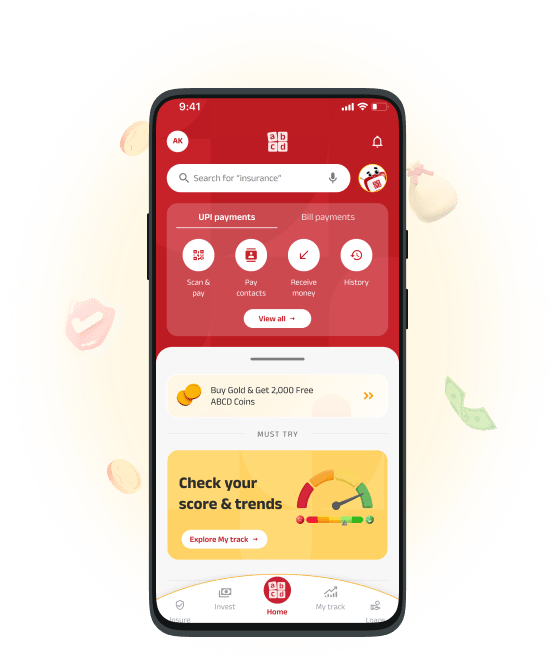
ABCD - One app for
Secure yourself and your loved ones financially with life insurance. Buy online through the ABCD app and get instant coverage.
-
 Range of insurance policies to choose from
 -
Online premium payments
-
Few clicks to buy the plan
 PLAY STORE
 APP STORE
Scan the QR code to download our Mobile App

Understanding Nishchit Aayush Plan
What is the ABSLI Nishchit Aayush Plan?
- It is an individual savings life insurance plan.
- It is a non-linked plan and the whole premium goes towards coverage.
- It offers guaranteed1 regular income and lump-sum benefits.
- It pays a death benefit to the family in the event of the policyholder's demise.
How does the ABSLI Nishchit Aayush Plan work ?
Buying
You choose the income variant, the sum assured amount, and the term.
Premium payment
You pay a premium to the insurer, either on a monthly, quarterly, half-yearly, or annual basis.
Guaranteed* income
You start receiving a fixed amount at the end of every year from the first policy year.
Maturity benefit
If you survive the policy term, a fixed lump-sum maturity benefit is paid under some income variants.
Death benefit
If you pass away during the term, your nominee receives the sum assured on death.
Who should invest in the ABSLI Nishchit Aayush Plan?
Young professionals
Investing in this plan early in one's career can help accumulate wealth over time and build a strong financial foundation for the future.
Parents
It can help parents secure their children's future by building a financial safety net for their education, marriage, or other milestones.
Married couples
Couples can invest in the plan to achieve shared financial goals, such as buying a home or preparing for retirement.
Risk-averse investors
The Nishchit Aayush Plan offers stable returns and a lower risk profile than other investment options such as equities or mutual funds.
People looking for tax savings
Premiums paid towards the plan are tax deductible up to ₹1,50,000 in a year.
People wanting an emergency fund
Anyone looking to create an emergency fund can consider the Nishchit Aayush Plan as a safe and stable option.
What are the key advantages of investing in a Savings Plan?
-
Disciplined saving
Savings plans provide a structured approach to saving money by setting aside a predetermined amount of money regularly. This can help you develop a habit of saving and avoid the temptation to overspend.
-
Long-term growth
It offers the potential to grow your money over the long term through compounding. This means that your earnings are reinvested to grow even more.
-
Low risk
Savings plans are generally considered safe investment options, especially those backed by government institutions or reputable financial organisations.
-
Financial security
It can help you achieve financial security and achieve your financial goals, such as saving for retirement, purchasing a home, or funding your child's education.
-
Flexibility
It lets you choose how much to save, how long to invest, and how you want to receive the money.
What are some of the things to consider before investing in a Savings Plan?
Goal
What are you saving for? A down payment on a house? Retirement? Your child's education? Once you know your goals, you can choose a savings plan that is designed to help you achieve them.
Risk appetite
How much risk are you comfortable with? Some plans, such as fixed deposits, are relatively low-risk, while others, such as mutual funds, are higher-risk. Consider your risk tolerance when choosing a savings plan.
Duration
How long can you invest for? Savings plans have a lock-in period, so consider your investment time frame when choosing a savings plan. Also, the longer you stay invested, the more you can grow your wealth.
Liquidity
Would you need access to your money? If you need to be able to access your money quickly, you may want to choose a savings plan that allows partial withdrawals or loans against the plan.
What are the different benefits paid by the plan?
-
Survival benefit
It is the guaranteed* regular income you get for every year of the term you survive. You can choose from five different income options at the time of purchase.
-
Maturity benefit
It is the lump sum amount you get at the end if you survive the policy term. This is available in all income variants except Income Only Benefit.
-
Death benefit
It is the amount your nominee gets in case you pass away during the term. The amount is the higher of sum assured on death or the surrender benefit amount.




.webp?extension=webp)
.webp?extension=webp)


ABC Of Insurance
*Provided all due premiums are paid.
**Not applicable for Income Only Benefit.
$NON-POS:
Minimum
Long Term Income: 30 days#
Whole Life Income: 30 years
#In case the Life Insured is a minor, the Policy will automatically vest once the Life Insured attains the age of majority. The risk coverage for the minors will start from the Date of Commencement of Risk.
Maximum: 55 years
$POS Boundary Conditions:
Minimum: 30 Days#
#In case the Life Insured is a minor, the Policy will automatically vest once the Life Insured attains the age of majority. The risk coverage for the minors will start from the Date of Commencement of Risk.
Maximum: 50 years
This policy is underwritten by Aditya Birla Sun Life Insurance Company Limited (ABSLI). This is a non-linked non-participating individual savings life insurance plan. GST and any other applicable taxes will be added (extra) to your premium and levied as per extant tax laws. An extra premium may be charged as per our then existing underwriting guidelines for substandard lives, smokers or people having hazardous occupations etc. For further details please refer to the Policy contract. Tax benefits are subject to changes in the tax laws. For more details and clarification call your Insurance Advisor or visit our website and see how we can help in making your dreams come true. UIN: 109N137V05
ADITYA BIRLA CAPITAL DIGITAL LIMITED is a corporate agent of Aditya Birla Sun Life Insurance Company under IRDAI Registration No: CA0871 and does not underwrite the risk or act as an insurer.
Registered Address: 18th Floor, One World Center, Tower 1, Jupiter Mills Compound,841 Senapati Bapat Marg, Elphinstone Road Delisle Road, Mumbai Maharashtra 400013. Participation by the ABCD’s clients in the insurance products is purely on a voluntary basis.
The Trade Logo “Aditya Birla Capital” Displayed Above Is Owned By ADITYA BIRLA MANAGEMENT CORPORATION PRIVATE LIMITED (Trademark Owner) And Used By ADITYA BIRLA SUN LIFE INSURANCE COMPANY LIMITED (ABSLI) under the License. For policies issued on minor life, the date of commencement of risk shall be the date of commencement of the policy. Where a policy is issued on a minor life, the policy will vest after attainment of majority of the Life Insured. Where the Life Insured (whether major or minor) and Proposer/Policyholder is different, on the death of the Proposer/Policyholder, his legal heirs, in accordance with the existing succession laws, will be considered as new Proposer/Policyholder. Tax benefits are subject to changes in the tax laws.
For more details on risk factors, terms and conditions, please read the sales brochure carefully before concluding the sale. Registered Office: One World Centre Tower 1, 16th Floor, Jupiter Mill Compound, 841, Senapati Bapat Marg, Elphinstone Road, Mumbai - 400013. IRDAI Reg No.109 | Toll Free No. 1-800-270-7000 | Website: https://lifeinsurance.adityabirlacapital.com | CIN: U99999MH2000PLC128110 | UIN:109N108V11| ADV/3/23-24/3887
BEWARE OF SPURIOUS / FRAUD PHONE CALLS!
IRDAI is not involved in activities like selling insurance policies, announcing bonus or investment of premiums. Public receiving such phone calls are requested to lodge a police complaint.