Home Finance
 Personal Finance
 SME Finance
 Loan Against Securities
 Business
 Mutual Funds
 Stock and Securities
 Portfolio Management Services
 Pension Funds
 Real Estate Investments
 Life Insurance
 Health Insurance
 Multiply Wellness
 Motor Insurance
 Travel Insurance
 Pay Bills
 Pay anyone
 Pay on call
 Payment Lounge
 ABC Credit Cards



 1800-270-7000

 ENG
ENG 


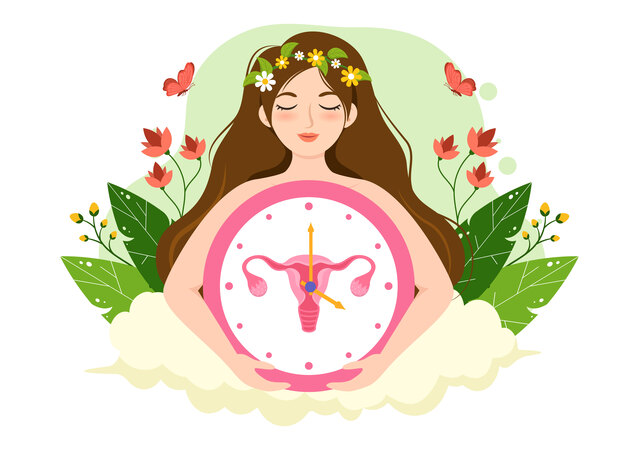
Menopause is defined as the cessation of menstruation for 12 consecutive months following the exhaustion of ovarian follicles. As the ovarian follicles get depleted, ovarian function starts to go down, fertility declines, and periods get irregular till the time they completely stop.
Menopause is not a sudden event, but a transition that occurs over several years; a transition that begins with perimenopause. Perimenopause is the time before menopause that may last from 2 to up to even 10 years, when the ovarian follicles start getting depleted leading to fluctuations in the hormones estrogen and progesteron,e leading to symptoms arising due to the same.
Common Symptoms During Perimenopause and Menopause
People often make the mistake of assuming that menopause is simply associated with changes in periods or the cessation of periods. But the menopause transition entails way more than that. In fact, a woman’s periods may even be regular in her perimenopause when she may start having symptoms of the menopause transition like hot flashes, brain fog, anxiety, mood swings, wrinkles on the skin or sleep disturbances. While these are the commonly known symptoms around this time, there are more than 35 listed symptoms that a woman might have in her menopause transition including hair loss and thinning, skin pigmentation, itchy ears, bloating, constipation, extreme fatigue, recurrent urinary infections, vaginal dryness, low libido and so on.
Hormonal Changes During Perimenopause and Menopause: Estrogen and Its Role
The reason why menopause can have symptoms going way beyond just period abnormalities is that the hormones estrogen and progesterone that are secreted by the ovaries in the menstrual cycle have receptors all throughout the body that take care of functions that go beyond reproduction.
Estrogen has receptors all throughout the body from head to toe- starting from the hair, skin, brain, heart, digestive tract, urinary system, and the musculoskeletal system. And estrogen deficiency arising from the low levels of estrogen at menopause and the fluctuating levels of estrogen in perimenopause lead to symptoms that can affect all these systems.
Want to understand hormonal fluctuations better? Read our complete guide on How to Deal With Hormonal Imbalance for practical tips.
Diagnosing Menopause and Perimenopause: How to Know If You’ve Reached Menopause:
The time when you may reach your menopause can be hereditarily linked to the time your mother or your elder sister had their menopause. And while the average age of menopause all over the world is between 48 to 51 years, the average age for Indian women to have their menopause, for reasons as yet unknown, is 46 years.
And since perimenopause can begin from 2 up to 10 years before menopause, you may begin your perimenopause even in your late 30s. So symptoms like tiredness, mood swings or brain fog happening in the late 30s or early 40s may be attributed to the menopausal transition.
These symptoms begin way before the actual, measurable hormonal dips can be ascertained through blood tests. So very often, blood tests done at this time to measure the hormonal levels may turn out to be normal. And so, we prefer to use the symptoms as a guide to diagnosing perimenopause rather than any blood tests.
Want to know more about early menopause? Check out our detailed guide on Early Menopause.
Blood Tests
Blood tests are required for the diagnosis of menopause only when the menopause occurs prematurely, before 40 years of age, when it is called POI, or premature ovarian insufficiency.
At other times, menopause is a good time to get yourself tested by doing a round of routine blood tests that test for your liver and kidney function, your cholesterol and sugar levels and your vitamin D and B12 levels. Some period dysfunctions happening due to menopause can mimic those due to thyroid dysfunction as well. Hence we also prefer to get those done.
Can you still get pregnant during perimenopause?
Menopause is a time that sees the gradual shutdown of the function of the ovaries. It is a time when your ovarian reserve has gone down and also when the present ovarian follicles are aged follicles, which are more likely to give rise to a chromosomal dysfunction if a pregnancy does occur.
All the same we do advise you caution and also advise you to use contraception for a year after your menopause date. Instances of an unusual freak ovulation resulting in a pregnancy haven’t been unheard of!
Apart from the symptoms that menopause brings along, it also causes changes in your body that may stay hidden till the time they cause serious damage — which could be bone density loss leading to osteoporosis which can cause a fracture even after simple falls, or memory loss that seems harmless till it progresses to severe dementia or changes in the heart and circulation and metabolism which can lead to a heart attack or a stroke.
When to See a Doctor?
While the symptoms of menopause may be inevitable, suffering is not. It is always prudent for you to talk to a doctor when the symptoms affect your quality of life negatively. So whether it is the hot flashes that are causing you distress, anxiety that is disrupting your life, or heavy bleeding in periods that leads to anemia and a lowered immunity; it is always good to talk to your doctor to understand the options you have to manage these issues.
Frequently Asked Questions
Perimenopause is the transition phase when hormones start fluctuating and periods become irregular, while menopause is confirmed after 12 straight months without a period.
The first sign of perimenopause may not always be period irregularities. The first signs and symptoms may vary, with some women having mood swings, changes in energy levels, joint pains or a shortening of period cycles as the initial symptoms.
Symptoms like mood swings, sleep problems, joint pain, brain fog, and sudden anxiety are often overlooked but can be linked to menopause.
Perimenopause is the time before menopause and can range from 4-10 years. With the average age of menopause in Indian women at 46 years, it is possible for perimenopause to begin at 36-38 years of age in some women.
Yes, periods can still be regular at first, but subtle changes in flow, duration, or PMS symptoms may start appearing.
Usually no—menopause is diagnosed based on symptoms and no periods for 12 months, though blood tests may help in unclear cases.
Early signs include irregular periods, hot flashes, night sweats, mood changes, fatigue, and trouble sleeping.
Yes, falling estrogen levels can lead to dry skin, fine lines, skin pigmentation, hair thinning, and increased hair fall.