Home Finance
 Personal Finance
 SME Finance
 Loan Against Securities
 Business
 Mutual Funds
 Stock and Securities
 Portfolio Management Services
 Pension Funds
 Real Estate Investments
 Life Insurance
 Health Insurance
 Multiply Wellness
 Motor Insurance
 Travel Insurance
 Pay Bills
 Pay anyone
 Pay on call
 Payment Lounge
 ABC Credit Cards



 1800-270-7000

 ENG
ENG 


Raisins and Thyroid Health: The Superfood You Didn’t Know About
The thyroid gland is a crucial organ that controls your body’s functions by secreting and controlling hormones that govern your overall health. The thyroid is a tiny, butterfly-shaped gland located in your neck that controls the speed of your metabolism. When the thyroid fails to work properly, you’re likely to have problems with processing and digesting your food. The good thing is that raisins are good for thyroid health, have emerged as a natural addition to your diet. According to researchers, consuming raisins is said to support the structure and function of the thyroid gland due to their trace minerals like iodine and antioxidants. So let’s learn more about raisins and their newfound superpower.
What Are Raisins and Their Nutritional Value?
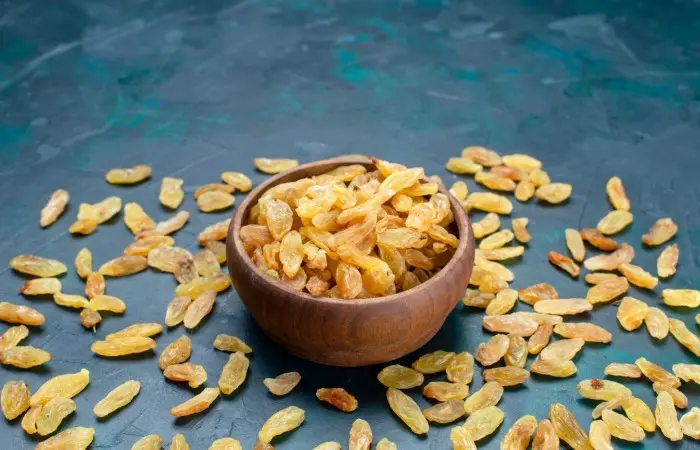
Raisins are essentially dried grapes produced by sun-drying or dehydrating grapes until they reach 15% hydration levels. There are different varieties of raisins, like dark currants, natural raisins, and golden sultanas.
In terms of their nutritional value, raisins are rich in natural sugars and can offer you a quick boost of energy. Are raisins good for thyroid patients? Yes, because they contain potassium, iron, iodine, fibre, calcium, and antioxidants, all of which, combined, can help with digestion, bone health, and the prevention of anaemia.
Are Raisins Good for Thyroid?
In the study mentioned earlier, researchers conducted experiments on different groups of rats. They used two groups of rats for the exercise, where they fed raisins to one group of rats on a High-Calorie Diet (HCD) while the other group wasn’t fed raisins. The researchers closely monitored the glucose, insulin, and hormonal levels of both groups. What they found formed the basis of the theory that raisins can be a superfood for thyroid health.
The results showed that rats with HCD and raisins showed better regulation of TSH, T3 and thyroxine (T4), alongside improved glucose and insulin levels. While the results aren’t conclusive, it can be said that raisins for thyroid could potentially help improve the functioning of the gland by protecting it from oxidative stress. However, more research needs to be done to ascertain exactly how beneficial raisins can be for thyroid patients.
Benefits of Eating Raisins for Thyroid Patients
Irrespective of the study’s outcome, here are a few key benefits of eating raisins for thyroid patients.
- Raisins could potentially help people with hypothyroidism by helping manage cholesterol levels by reducing LDL levels and increasing HDL levels.
- Raisins are rich in fibre, which is essential in aiding good digestion, treating constipation, and improving regularity.
- The high source of iron in raisins is important for supporting the Thyroid Peroxidase (TPO) enzyme, which is essential for the production of thyroid hormones.
How to Eat Raisins If You Have Thyroid?
You can eat raisins in a number of different ways. If you’re looking for ways to spruce up and add raisins to your diet, here are a few ways to consider:
- Add them to meals: You can add raisins to your breakfast cereals, oats, salads, and smoothies.
- Pair them with other superfoods: You can have a dry fruit cocktail by pairing raisins with walnuts (rich in selenium) and almonds once a day to boost your metabolism.
- Soak them overnight: You can soak raisins overnight and consume the softened raisins for better absorption.
- Avoid sugar-coated raisins: Avoid eating these variants, as excess processed sugar can affect your metabolism.
Who Should Be Careful While Eating Raisins?
Although raisins are rich in nutrients, they aren’t for everybody. Here are a few individuals who need to be careful:
- People with diabetes should consume raisins in strict moderation, as they are rich in natural sugars, which can cause blood sugar spikes
- People looking to lose weight should monitor their intake, as raisins are calorie-dense.
- People who have dental issues should be cautious, as the sticky residue can increase plaque formation.
- Small children should be supervised as raisins could potentially be a choking hazard.
- People with kidney stones should consume them in moderation, as the oxalates in them may contribute to stone formation in sensitive individuals.
Raisins vs Other Dry Fruits for Thyroid
Now that we’ve established is raisin good for thyroid health, let’s see how other dry fruits compare:
- Almonds and Cashews: Both of them are high in zinc and magnesium, which help convert inactive T4 into active T3.
- Dates & Fig: They are dense in fibre and calories, which helps give you more energy and helps in digestion.
- Walnuts: They are high in omega-3 and selenium, which aid hormone production and reduce oxidative stress.
Final Thoughts
Raisins are a huge part of Indian culture. Making a habit of consuming them in moderation with your everyday diet can have a wonderful impact on your thyroid health.
Frequently Asked Questions
Yes. Raisins are good for thyroid patients as they are rich in antioxidants, iodine, and iron, which support hormonal health.
Ideally, you should have 5-6 raisins every day. Any more can increase your calorie consumption.
Yes. Soaking raisins in water overnight softens them and may help with easier digestion and mineral absorption.
No. While raisins are beneficial, they should be consumed alongside any prescribed medications, never as a replacement.