Home Finance
 Personal Finance
 SME Finance
 Loan Against Securities
 Business
 Mutual Funds
 Stock and Securities
 Portfolio Management Services
 Pension Funds
 Real Estate Investments
 Life Insurance
 Health Insurance
 Multiply Wellness
 Motor Insurance
 Travel Insurance
 Pay Bills
 Pay anyone
 Pay on call
 Payment Lounge
 ABC Credit Cards



 1800-270-7000

 ENG
ENG 


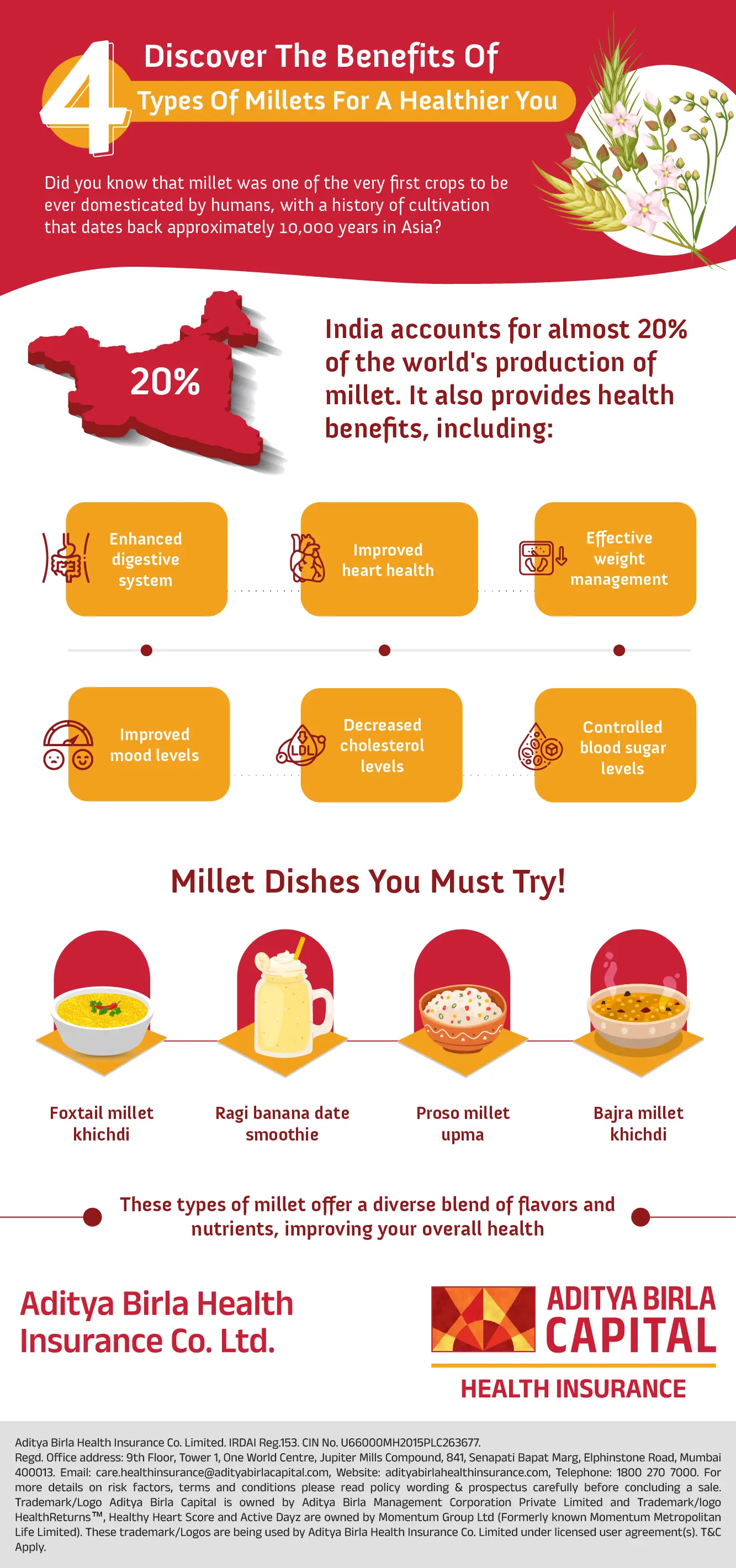
In today’s world of making health-conscious decisions, health and overall wellness have become a lifestyle. This is why several nutritional food products, including various types of millet, oats, and other cereals, are gaining worldwide recognition. They do not contain gluten, enabling you to manage health conditions like diabetes. There are several types of millets that you can consume to get different types of nutrients and calories.
What are Millets?
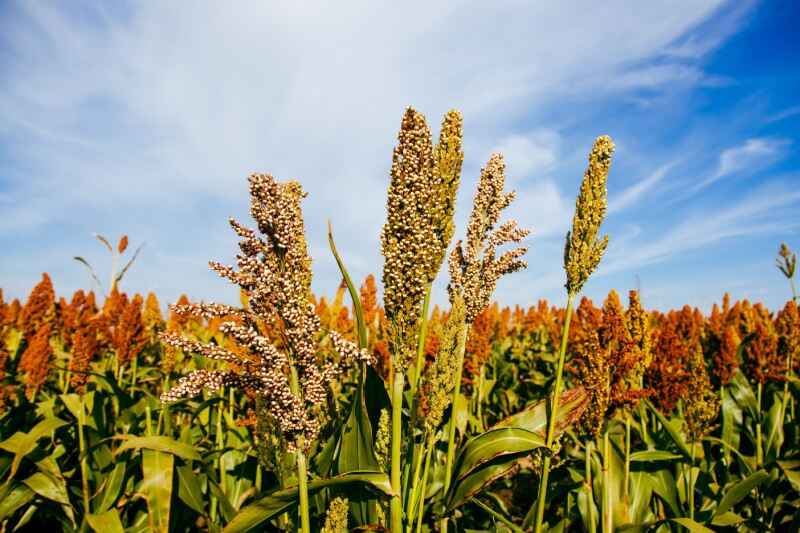
Millets are a type of cereal that belongs to the Poaceae variant, known as the grass family. They are mostly cultivated and consumed in Asia and Africa. Various types of millets are widely popular as a part of a healthy diet plan, as they are rich in vital micronutrients like fiber, protein and antioxidant content.
Why Choose Millets?
Gluten-free and easily digestible
Millets are generally easy to digest as compared to other grains. Gluten is a protein that occurs naturally in grains like wheat, barley, and rye. You must avoid it if you have gluten sensitivity. Millet is a superfood for you if you follow a gluten-free diet. They are rich in dietary fiber, both soluble and insoluble. The insoluble fiber is a prebiotic, which means it supports good bacteria in your gut. The fiber also helps in excretion, keeping it regular and reduces your risk of colon cancer.
Rich source of protein and fiber
Millets are high in nutrition and dietary fiber. Dietary fiber in millets has water absorbing and bulking properties. It increases transit time of food in the gut which helps in reducing the risk of inflammatory bowel disease and acts as a detoxifying agent in the body. Millets serve as a good source of protein and micronutrients including calcium, iron, phosphorus, etc. They contain 7-12% protein, 2-5% fat, 65-75% carbohydrates and 15-20% dietary fiber.
Suitable for modern lifestyles
Different types of millets cater to various aspects of a modern lifestyle. They fit very fluidly into fast-paced routines of the modern day and age, such as:
- They are adaptable to different recipes
- They cook quickly compared to other foods
- They are a good source of quick, sustained energy without the risk of blood sugar spiking
- They have great nutrient density and are a great source of protein and fiber
- They have a very long shelf life, which makes them an ideal option for shopping in bulk without worry
- They are very adaptable for all types of diet, whether it is fitness-focused, fat-loss focused, or others
Nutritional Value of Millets (Why They’re a Superfood)
Millets are a very rich source of essential nutrients. Here is what they generally contain:
| Nutrient (per 100 g, raw) | Approx. Value |
| Carbohydrates | 60–70 g |
| Protein | 7–12 g |
| Dietary fibre | 8–12 g |
| Healthy fats | 3–5 g |
| Iron | 3–9 mg |
| Magnesium | 100–140 mg |
| B-vitamins | Moderate |
Combining plant protein, high fiber, and complex carbohydrates is no easy task for a food group, but millets do so efficiently. This further results in slow digestion of food, which is very healthy for the body and blood sugar-friendly for diabetics. And since you digest food slowly, you feel full for longer, helping you to control your diet. Different types of millets are good for your metabolism, gut health, and heart function. Combine all of these features into your fast-paced modern lifestyle, and millets truly turn into a super food in more than one way.
Different Types of Millets and Their Benefits
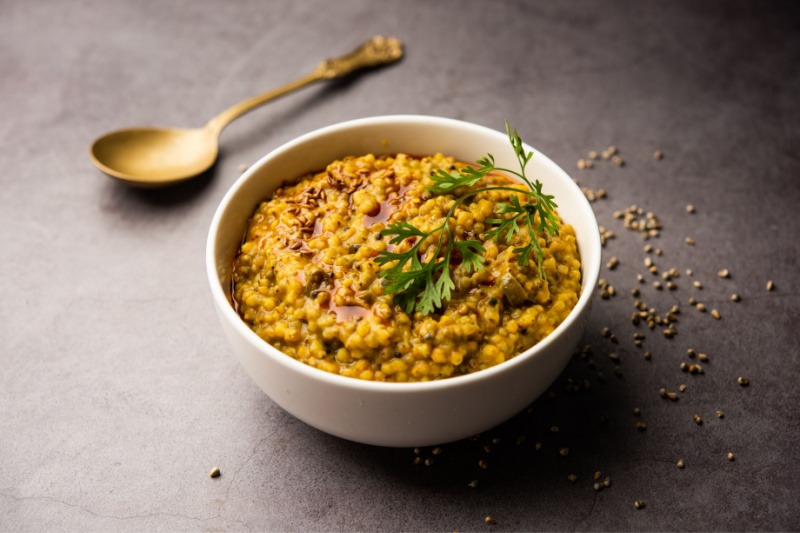
Here are the different types of millet that you can add to your diet to enhance your overall health:
Finger millet (ragi)
Finger Millet, or ragi, is a favorite among fitness experts who choose healthier alternatives to traditional grains like rice or wheat. Not only is it rich in calcium, but it also has a healthy amount of iron and other essential minerals. This is why consuming ragi millets benefits young children, as it supports brain development.
Pearl millet (bajra)
Pearl millet, or bajra, is enjoyed in various dishes, from roti (a type of flatbread) to khichdi (a rice and lentil dish). Bajra is a nutrient powerhouse, providing a good amount of iron, fiber, protein, and essential minerals like magnesium and calcium. Making pearl millet a part of your regular diet can improve your overall health significantly.
Foxtail millet (korralu)
Foxtail Millet, referred to as korralu in India, is found in the form of rice flour. This type of millet is rich in carbohydrates, which play a crucial role in maintaining balanced blood sugar levels within the body. Additionally, it has a high iron content. Incorporating this millet type into your diet can enhance your overall immune system.
Proso millet (baragu)
Proso millet, or baragu millet, is a popular grain widely cultivated and consumed across the country. This millet is packed with Niacin (Vitamin B3), an essential nutrient known to prevent Pellagra, a skin disorder characterized by dry, scaly, and rough skin. Also, it is rich in magnesium which helps in reducing the risk of type–2 diabetes. Including Proso millet in your diet can help maintain healthy skin and improve overall well-being. Baragu also contains Lecithin, a compound that ensures smooth brain activity by stimulating it indirectly.
Millets vs Rice and Wheat – What’s the Difference?
Various types of millets contribute to various health functions for your body compared to wheat and rice. Here is how:
- Nutritional density – Millets have a much higher nutritional density than rice and wheat. Rice and wheat lose a lot of their nutritional value when they are processed.
- Impact on blood sugar levels – With a low glycaemic load, millets become much more efficient in maintaining blood sugar levels in your body compared to wheat and rice.
- Digestive health – Millets are also very helpful in improving your gut health, with rich fiber content that assists in the overall digestion process.
- Sustainable – Unlike rice and wheat, millets are grown in drier climates, use substantially less water, and require much less favourable soil conditions to grow.
Millets represent an approach to more nutritious eating that can provide the long-term benefits of good health.
Health Benefits of Including Millets in Your Diet
There are many health benefits of including millets in your daily diet that you might not be aware of. They are an all-rounder, comprehensive alternative to wheat and rice, rich in nutrient values.
- Supports gut microbiome – Fiber in millets also acts as a prebiotic, which nourishes your healthy gut bacteria. This helps in improving your overall gut health.
- Good for managing inflammation – Millets contain polyphenols, which reduce low-level inflammation, which is often attributed to unhealthy lifestyles and chronic conditions.
- Improves micronutrient intake – Millets contain high amounts of zinc and magnesium, which help to make up for any nutrient deficiencies in the diet daily.
- Long-term metabolic support – The minimum processing of millets ensures that they retain the natural nutrients that enhance metabolism.
How to Include Millets in Your Daily Diet?
It is quite easy to incorporate millets in your daily diet. You can start by using millets as an alternative to wheat or rice dishes like rotis, khichdi, dosa, etc. You can even go for millet flakes or porridge for breakfast, and experiment with adding cooked millets to your soups or salads to add more variety.
Keeping different types of millets in rotation for your diet can make the experience diverse. Millets can be incorporated into many recipes, so experimentation is always on the table with them, literally!
Key Takeaways
- Millets are gluten-free and are a rich source of protein and fiber.
- The various types include pearl millet, finger millet, and proso millet.
- They can easily be incorporated into a variety of dishes such as porridge, salads, and soups.
Frequently Asked Questions on Types of Millets
There are many benefits of consuming millets for diabetic people. For example, one of the benefits of ragi in your daily diet is that it has a very low glycaemic impact, which helps diabetics in avoiding any blood sugar spikes.
Yes, all millets are naturally gluten-free and can be consumed without worry by people with gluten sensitivity.
Foxtail millets and also proso millets are very light on the stomach and easy to digest.
Yes, millets can be consumed daily. Make sure to rotate and eat them in balanced portions.
You can use millets as an alternative ingredient to wheat and rice while cooking foods like rotis, cooked grains, and khichdi.