Home Finance
 Personal Finance
 SME Finance
 Loan Against Securities
 Business
 Mutual Funds
 Stock and Securities
 Portfolio Management Services
 Pension Funds
 Real Estate Investments
 Life Insurance
 Health Insurance
 Multiply Wellness
 Motor Insurance
 Travel Insurance
 Pay Bills
 Pay anyone
 Pay on call
 Payment Lounge
 ABC Credit Cards



 1800-270-7000

 ENG
ENG 


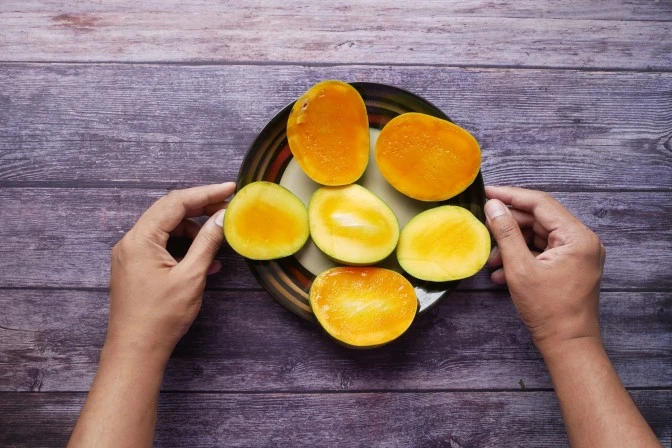
Mangoes, one of the most popular fruits in the world, are also known as the king of fruits in summer. However, since they are sweet and juicy, it’s a no-brainer that people with diabetes doubt if the fruit is good for them. Can a diabetic patient eat mango even if their sugar content is high?
Is Mango Good for Diabetics?
Mangoes are often called the king of fruits. Rich in fibre and nutrients, the fruit is also high in natural sugar. Hence, for those managing diabetes, the question remains — is mango fruit good for diabetics? Find out more in the guide below.
Mango Nutrition Facts
Despite its sweetness, the fruit is a powerhouse of essential nutrients. Here is what one cup (165 grams) of sliced mango offers:
- Calories: 99
- Carbohydrates: 25 grams
- Sugars: 22.5 grams
- Fibre: 2.6 grams
- Protein: 1.4 grams
- Vitamin C: 67% of the daily recommended intake
- Copper: 20% of the daily recommended intake
- Folate, Vitamin A, and Vitamin E: Good amounts contributing to immunity and cell repair
Mangoes’ fibre and antioxidant content help with digestion, heart health, and immunity. For people with diabetes, the fibre slows sugar absorption and maintains stable energy levels.
Glycemic Index of Mango
Now that we know mangoes and diabetes can coexist, let us look at the Glycemic index of mangoes to understand how it affects our blood glucose levels. Glycemic Index (GI) is a ranking system for foods from 0 to 100 that shows how much they raise blood glucose levels over time.
Classes of GI are:
- Low Glycemic index: 0-55
- Medium Glycemic index: 55-69
- High Glycemic index: More than 70
However, the effect of carbohydrate-containing foods on your blood glucose levels depends on several factors apart from GI, such as the quantity of the food consumed. The GI of Mango is 56, which falls under the medium category. Also, note that the ripeness of mango can affect its glycemic index. Ripe mangoes have a higher GI than unripe mangoes. Therefore, people with diabetes should opt for slightly unripe mangoes.
Can a Diabetic Eat Mangoes?
Since the GI of mangoes is moderate, people with diabetes should eat them in regulation. If you eat up to 100 grams of mango daily, there will be no spike in your blood glucose level.
Mangoes contain a high amount of fiber, calcium, and potassium. Its high-fiber content makes it a safe choice, even with diabetes.
If you’re still thinking if mango is good for diabetes, you can consider having mango chutney, a flavorful mango dish cooked with onion, vinegar, garlic, and various spices. It can be eaten with meat and veggies.
Tips to Eat Mangoes
Mangoes contain natural sugar, which can be dangerous for people with high blood sugar levels. Still, there are certain tips you can follow to steer clear of any health hazards:
- When you’re eating mango, avoid consuming other carb-rich foods, as they can spike your blood glucose levels.
- Try to balance the effects of mangoes with foods rich in proteins and fiber, such as eggs or nuts.
- Check your sugar level before consuming mangoes to understand their impact on your health.
How to Make Mango More Diabetes-friendly?
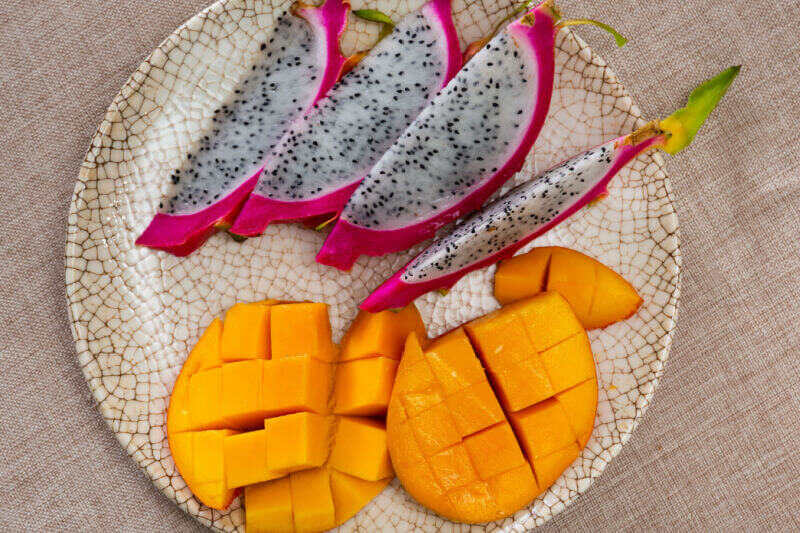
So, can a diabetic person eat mango? It is always worth remembering that mangoes have a lot of nutritional value. Therefore, it’s better to consume mangoes in a diabetes-friendly way.
- Juicing mangoes might lead them to lose their fiber content. Eating mangoes in the fruit form is a healthy way in itself.
- Stick to small portions when consuming mangoes.
- Avoid eating over-ripe mangoes because they have a much denser sugar content.
Mangoes can be a healthy evening snack in between meals. Pair mangoes with fruits like kiwis or berries with a low glycemic index.
Practice Portion Control
Limit your intake to 1/2 cup of sliced mango per serving.
Pair with Protein or Healthy Fats
Combine mango with protein-rich or healthy-fat foods, such as Greek yoghurt, almonds, or seeds, to reduce the rate at which sugar enters your bloodstream.
Eat at the Right Time
Consume mango as a mid-morning or evening snack instead of right after meals. This helps prevent overlapping carbohydrate intake from other foods.
Choose Fresh Over Processed
Avoid canned mangoes, juices, or syrups. These contain added sugars and preservatives.
How Mango Affects Blood Sugar Levels?
GI is essential to consider if you want to know how mangoes affect your blood sugar levels. Mangoes have a medium GI, meaning that although they contain sugar, their impact is minimal. In addition, dietary fibers slow down the sugar absorption rate and prevent blood sugar spikes.
In a nutshell, mangoes might have a high carb and calorie count, but the nutrients in the fruit can help your body control the blood sugar level, making it a fantastic health choice. You can measure your blood glucose level online on our Online Blood Sugar Calculator.
Key Takeaways
- The Glycemic Index (GI) is a system that ranks foods on a scale from 0 to 100 based on their impact on blood glucose levels over time.
- Mangoes have a moderate GI of 56, so individuals with diabetes should consume them in moderation.
- It’s best to stick to small portions and avoid overripe mangoes, as they contain a higher concentration of sugars.
Frequently Asked Questions
It is best not to eat mango daily. Having small portions two to three times a week during the mango season is usually safer.
Mid-morning or evening, between main meals, is the best time.
No. Mango juice lacks fibre and can cause a quick rise in blood sugar levels compared to the whole fruit.
Mangoes like Alphonso and Payri, which are naturally less fibrous and moderately sweet, are better suited for diabetics.
Roughly 2–3 small slices (around 80–100 grams) are safe for most individuals. Always consult your doctor or dietitian for guidance.
Popular Searches
rock salt | bananas and amlodipine | ayurvedic medicine for cholesterol | pranayama for asthma | homeopathic medicine for platelets increase | can high blood pressure cause bleeding from mouth | unhealthy food | moringa powder benefits | kapalbhati benefits | benefits of walking barefoot | asana for diabetes | trans fat foods | biotin rich foods | vajrasana benefits | sapodilla benefits | is amla good for asthma patients | right shoulder pain | how to control diabetes without medicine | espresso | home remedy for sore throat and dry cough | analogue paneer | how to measure biological age at-home | indian food diabetes type 2 | chromium and magnesium foods for diabetes | 7 yoga poses for chakras | active health v2 | winter fruits | asana for diabetes | raisins benefits for skin | blood pressure range by age in india