
 Home Finance
 Personal Finance
 SME Finance
 Loan Against Securities
 Business
 Mutual Funds
 Stock and Securities
 Portfolio Management Services
 Pension Funds
 Real Estate Investments
 Life Insurance
 Health Insurance
 Multiply Wellness
 Motor Insurance
 Travel Insurance
 Pay Bills
 Pay anyone
 Pay on call
 Payment Lounge
 ABC Credit Cards



 1800-270-7000

 ENG
ENG 


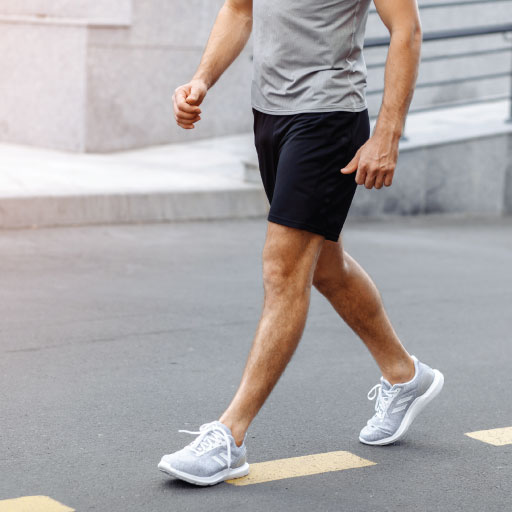
While walking is often considered simple, more often than not we tend to ignore the right posture or technique while walking. Read on to find out how many types of walking have developed and how they can improve your health.
Different types of walking
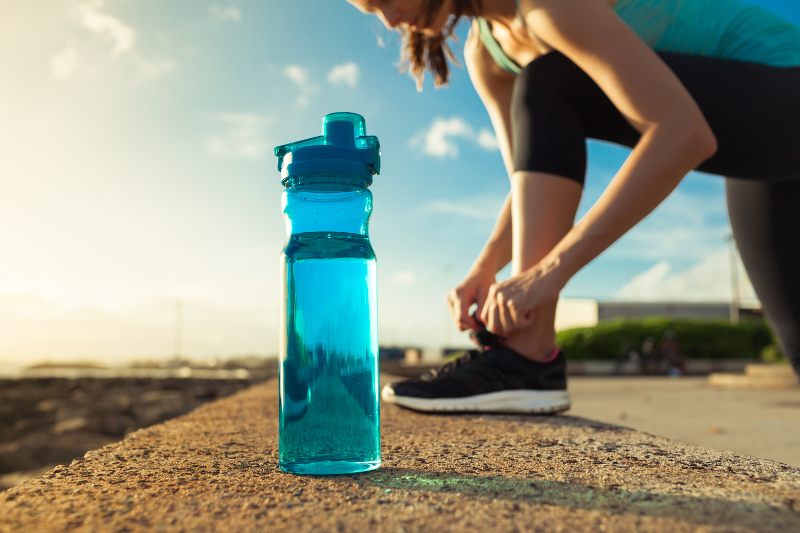
Different walking styles can offer multiple physical and mental health benefits. While working out, you can incorporate a mix of these different types of walking workouts to improve your overall health:
- Brisk Walking
Brisk walking is a moderate-intensity exercise wherein your pace is slightly faster than regular walking but slower than a jog. When brisk walking, your heart rate increases and so does your breathing, leading to more calories burned. This activity has significant heart health benefits, as it consistently pushes your cardiovascular system to pump blood faster and keeps it healthy.
- Stroll Walking (Casual Walking)
Strolling is the casual pace that all of us are used to. It is highly beginner-friendly, as just about everyone can engage in it. When done daily, these types of walking help improve your mood and positively affect your mental health.
- Nordic Walking
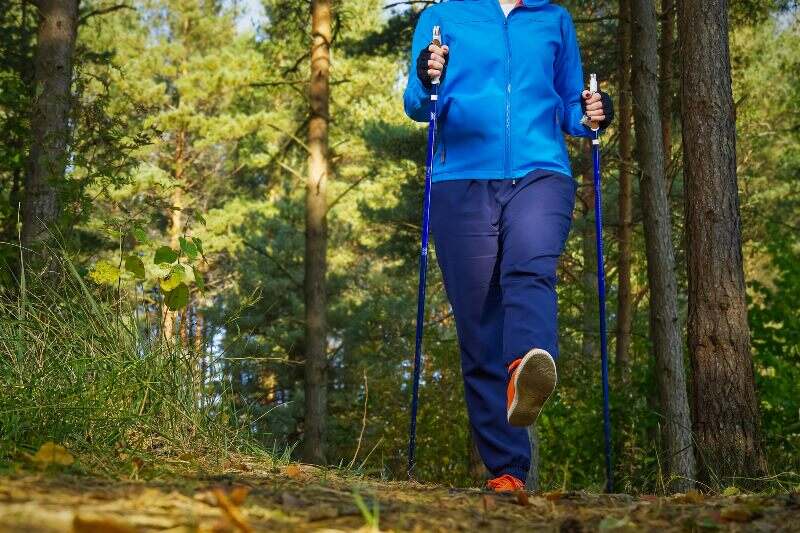
Originating in Finland, Nordic walking is a popular form of walking that uses two specially designed poles to engage the upper body. Unlike other forms, Nordic walking is a full-body workout as it requires you to use your arms to propel yourself forward. It is a highly effective way to lose weight as it engages more muscles and burns more calories than standard walking.
- Race Walking
Race walking is a competitive sport that features in the Olympics. Involving higher intensity than a typical jog, your feet need to maintain contact with the ground at all times.
- Chi Walking
Inspired by the Chinese martial art Tai Chi, chi walking is basically meditation in walking form. It requires paying close attention to your movement, keeping your core engaged and maintaining head and hips in alignment. By using calmer steps to reduce pressure on your hips and joints, this form of walking can improve your posture and long-term joint health.
How does walking improve overall health?
Although walking is a low-intensity exercise, it has many benefits:
- Boosts your metabolism
- Increases energy levels
- Promotes heart health
- Improves cardiovascular fitness
- Helps to strengthen your bones and muscles
- Improves muscle endurance
- Helps manage various lifestyle conditions, like high blood pressure, diabetes and weight management.
- Improves balance and coordination
However, you must maintain a good body posture while trying different walking styles to reap these benefits.
Improves Heart Health & Blood Circulation
Walking of any type or form can have a huge impact on your heart health. It enables your cardiovascular system to pump blood effectively and deliver fresh oxygen to your body.
Helps Manage Weight & Boosts Metabolism
Fitness professionals often recommend low- to moderate-intensity walks to burn excess calories and reduce weight. It also boosts your metabolism by assisting with better digestion.
Supports Mental Health & Reduces Stress
Walking has a positive impact on the mind. A simple stroll can help clear your head of stressful thoughts, as the body releases endorphins during physical activity.
Strengthens Bones, Muscles & Joints
Regular walking gradually adds vitality and strength to your skeletal system. It reduces general aches and pains.
Which Type of Walking Is Best for You?
Now that we’ve seen different types of walking, let’s take a look at which is best for you based on your needs.
Best Walking Type for Beginners
Strolls and casual walks are best for beginners because they aren’t strenuous. You have to be present and active for a set duration.
Best Walking Type for Weight Loss
Brisk walking and Nordic walking are best for weight loss as they engage your cardiovascular system and muscles more effectively. Adding short intervals of race walking can also increase the caloric burn.
Best Walking Type for Seniors
Chi walking and brisk walking in moderation are the best options for senior citizens as they help maintain overall health and balance without overstraining the body.
How to Maintain a Good Walking Posture?
To get the most out of your routine, you need to maintain the right posture.
Correct Head, Shoulder & Spine Position
Keeping your head straight, shoulders rolled back, and spine straight. Do not look down at your feet for long periods.
Ideal Arm Movement While Walking
Swing your arms alternatively to maintain balance. For instance, when you’re setting your right foot forward, swing your left arm, and vice versa. Remember, walking is essentially marching but with less rigid movement.
Foot Placement & Stride Length
Maintain a stride that feels easy for you. Over-striding can leave you off balance or potentially cause muscle cramps.
Key Takeaways
- Several types of walking include Chi walking, brisk walking, and stroll walking.
- Walking can boost your metabolism, increase energy levels, and promote heart health.
- When walking, keep your head up, with your chin parallel to the ground, and maintain an elongated spine by avoiding slouching or leaning forward.
FAQs
Strolling, brisk walking, nordic walking, and chi walking are some of the most common types of walking.
Brisk walking is ideal. It is a moderate-intensity cardiovascular workout most people can sustain as a habit.
Yes. Brisk walking is more beneficial for fitness as it increases the heart rate and enhances caloric burn compared to a casual pace.
Aim for at least 30 minutes of walking a day to maintain good health and cardiovascular fitness
The best time is whenever you can be consistent. It can be a morning walk for energy or an evening stroll to de-stress. Consistency is more important than the hour.
Stay tuned to the Activ Living Community. Keep up to date with the latest health tips and trends through expert videos, podcasts, articles, and much more in nutrition, fitness, mindfulness, and lifestyle conditions like Asthma, Blood Pressure, Cholesterol, and Diabetes.
You may also be interested in the following blogs:
- Footsteps To Wellness: The Benefits Of Walking Barefoot You Need To Know
- Benefits Of Walking After Eating & How It Helps in Diabetes
Popular Searches
How to lower blood pressure | Fruits good for liver | Unhealthy foods | Ragi Benefits | Basal Metabolic Rate | Acupressure points for High Blood Pressure | Ayurvedic medicine for blood pressure | How to control cholesterol at home | Homeopathy for Asthma | Biological Age | Home remedies for TB | Natural beta blockers | Negative effects of internet | Types of walking | Blood pressure calculator | Blood sugar calculator | BMI Calculator






Superb 🌹💚🌹
Thank you for this. I enjoyed reading this. This is really getting me motivated.
Nice discussion of walking styles
Thanks