Home Finance
 Personal Finance
 SME Finance
 Loan Against Securities
 Business
 Mutual Funds
 Stock and Securities
 Portfolio Management Services
 Pension Funds
 Real Estate Investments
 Life Insurance
 Health Insurance
 Multiply Wellness
 Motor Insurance
 Travel Insurance
 Pay Bills
 Pay anyone
 Pay on call
 Payment Lounge
 ABC Credit Cards



 1800-270-7000

 ENG
ENG 



How Yoga Helps Manage Diabetes Naturally
Yoga is known to help people with diabetes naturally. Let’s take a look at a few ways:
- Enhances Insulin Sensitivity: Yoga stretches help with better blood circulation and maintain muscle response, which in turn pushes the body to utilise glucose effectively.
- Reduces Stress Levels: Deep breathing yoga exercises help reduce cortisol levels in the body and bring down stress levels.
- Helps With Weight Loss: Yoga can help with weight management and fat reduction, both of which are known issues associated with diabetes.
Top Yoga Poses
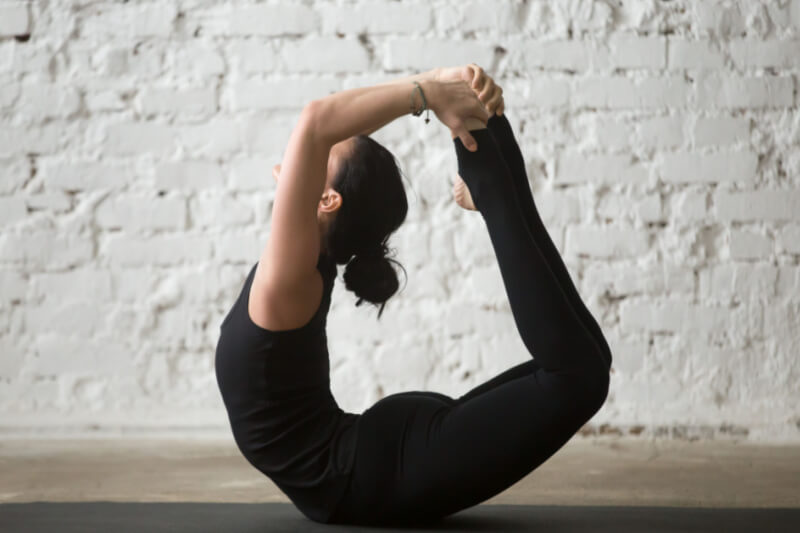
Dhanurasana (Bow Pose) –
This yoga pose strengthens and regulates the pancreas, making it the most suitable yoga for diabetes.
- Lie down on your stomach with your feet slightly apart.
- Fold your knees and hold your ankle.
- Take a deep breath and lift your chest from the ground. Simultaneously, pull your legs up and feel the stretch on your arms and thighs.
- Look straight ahead. Hold the pose for at least 15 seconds.
- As you exhale, slowly bring your chest down to the ground. Leave your ankle and bring your legs towards the ground.

Bhujangasana (Upward-Facing Dog Pose) –
This yoga asana targets your triceps, spinal extensors, and quadricep muscles to enhance muscle strength and reduce blood sugar levels.
- Lie on your abdomen and keep your legs straight.
- Keep your forearms perpendicular to the floor, and place your arm beside you.
- Press into your arms to lift your body, and try creating pressure on your feet to firm your hip muscles.
- Look straight and hold the position for 30-40 seconds. Remember to breathe properly.
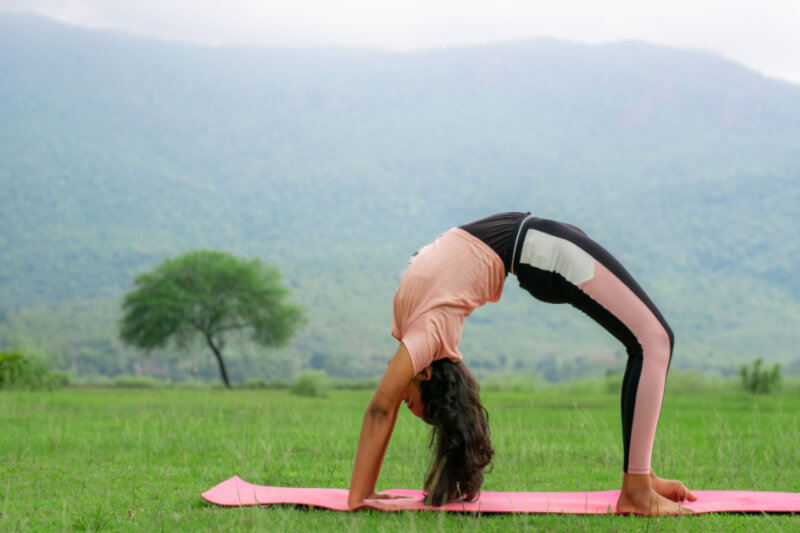
Chakarasana (Wheel Pose) –
This is yet another effective yoga for diabetes. This posture strengthens your pancreas and stimulates insulin release to balance blood sugar levels.
- Lie down on your back. Bend your knees and bring the soles of your feet close to your hips.
- Bring your palm under your shoulder. Ensure that your fingers point towards your shoulders. Keep your elbows shoulder-width apart.
- Press your palm firmly on the ground and inhale while lifting your shoulders, elbows, and hips.
- Straighten your arms and legs, so your hips and shoulder feel the upward push.
- Hold this pose for a few seconds. Bend your elbows and shoulders first to bring your head down slowly. After that, bend your knees to lower your hips and spine to the ground.
H3: Halasana (Plow Pose) –
This yoga for diabetes may help stimulate the thyroid gland, increase circulation, and reduce stress. It may also help relieve backache, headache, and insomnia as part of a regular yoga practise.
- From the shoulder stand, bring your feet to the floor above your head.
- Use a pillow or block for support if your feet don’t reach the floor.
- Keep your hands on your lower back for added support.
- Remain in the pose for 1 to 5 minutes.
- To release, roll your spine back down to your mat and raise your legs to form a 90-degree angle.
- Lower your legs back down to your mat.
H3: Balasana (Child Pose) –
This resting pose encourages relaxation, which may have a beneficial effect on blood sugar and general health. It may also help relieve back and neck pain, stress, and fatigue.
- While in a kneeling position, make sure your knees are hip-width apart.
- Sink back to bring your buttocks to your heels.
- You may place a cushion between your thighs and calves for support.
- Lean forward to rest your forehead on the floor.
- Extend your arms in front of you, or allow your arms to rest alongside your body with your palms facing up.
- Remain in this pose for up to 5 minutes.
- Release by lifting yourself into a seated position.
Does Yoga Really Work for Diabetes?
According to a study listed on the United States National Institute of Health, practising yoga consistently helps bring type 2 diabetes under control.
Best Time and Duration to Practise Yoga for Diabetes
Although there are no set rules on when the best time is to practise Yoga, practitioners believe that consistently doing yoga early in the morning for 30 to 45 minutes before breakfast helps manage blood glucose levels.
Who Should Avoid Certain Yoga Poses?
Even though yoga is generally considered safe, there are a few yoga postures for diabetes that certain people should avoid.
- People with high blood pressure or heart conditions should avoid poses like Shirsasana (headstand), Halasana (plow pose), and Sarvangasana (shoulder stand), among others. They should also avoid Kapalabhati breathing technique, Chakrasana (wheel pose), and Ustrasana.
- Pregnant women should avoid deep bending exercises, abdomen-engaging exercises, cobra pose, and lying on their stomachs.
- People with conditions like glaucoma or diabetic retinopathy should avoid poses that increase blood flow to the head.
- People with joint problems should avoid the pigeon pose and poses that need to exert weight on the wrists.
Role of Diet and Exercise Along with Yoga for Diabetes
A good diet and exercise with yoga is the perfect antidote to keep diabetes under control. This holistic practice can control blood glucose levels, improve insulin sensitivity, and help prevent or delay diabetes-related complications.
FAQs
A daily habit of doing yoga is ideal for diabetes patients, as it helps bring down blood sugar levels, reduce stress, and improve blood circulation.
Suryanamaskar, one of the most common yoga sequences, is best known for controlling blood sugar levels.
No. Yoga for diabetes cannot cure the condition completely. However, it can help bring down and keep diabetes levels under control with consistent practice.
Expert yoga practitioners recommend practising for 30–45 minutes a day.
Yes. Yoga is perfectly safe for people with type 2 diabetes.
Yoga should be done early in the morning on an empty stomach before breakfast.
Key Takeaways
- Yoga can control stress levels, prevent diabetic neuropathy, and maintain blood sugar.
- Practise dhanurasana, bhujangasana, chakarasana, halasana, and balasana to reduce diabetes risk.
- Include protein, healthy fats and fiber-rich foods; limit sugary, fried and unhealthy foods; try slow walking, yoga and pilates.
Stay tuned to the Activ Living Community. Keep up to date with the latest health tips and trends through expert videos, podcasts, articles, and much more in nutrition, fitness, mindfulness, and lifestyle conditions like Asthma, Blood Pressure, Cholesterol, and Diabetes. Activ Living ke saath sahi sehat ki shuruaat ABHIkaro.
You may also be interested in the following blogs:
Popular Searches
How to lower blood pressure | Fruits good for liver | Unhealthy foods | Ragi Benefits | Basal Metabolic Rate | Acupressure points for High Blood Pressure | Ayurvedic medicine for blood pressure | How to control cholesterol at home | Homeopathy for Asthma | Biological Age | Home remedies for TB | Natural beta blockers | Negative effects of internet | Types of walking | Blood pressure calculator | Blood sugar calculator | BMI Calculator